
Safari van vs SUV.The choice between a safari van and an SUV is one of the most consequential vehicle decisions on a Uganda safari, and it is one that many visitors approach with incomplete information — assuming the larger, more visually imposing safari van is automatically the superior option without understanding the specific trade-offs that Uganda’s routes and road conditions impose on the two vehicle types. Safari vans and safari SUVs are genuinely different tools for genuinely different safari formats, and the right choice between them depends on group size, who is driving, which parks the circuit covers, and what proportion of the safari experience happens on demanding off-road tracks versus comfortable tarmac approach roads. For self drive visitors specifically, the decision is considerably clearer than it is for guided tour passengers, and understanding why helps clarify the entire vehicle question before booking. This guide covers what each vehicle type actually is in the Uganda safari context, how they compare across the dimensions that matter most — roof game viewing, off-road capability, self drive suitability, capacity, and cost — and makes the case for which format serves which type of visitor on which Uganda circuit. Browse our self drive fleet and car hire and self drive options for the full range of Uganda safari vehicle options.
What Each Vehicle Type Is — Defining the Comparison
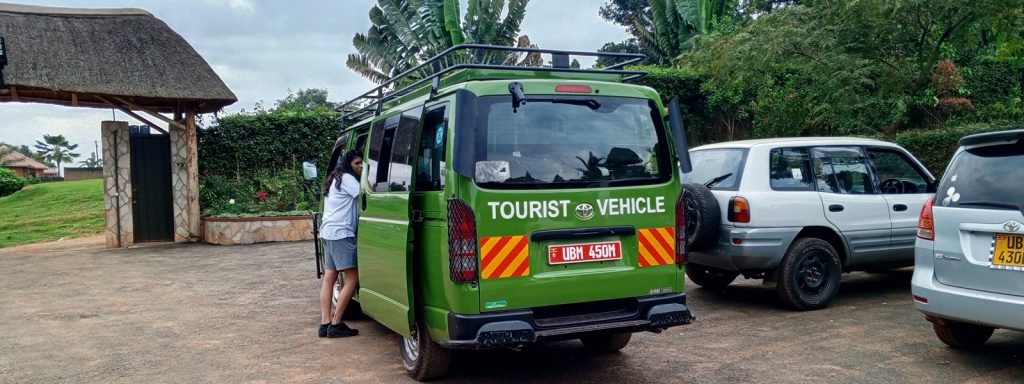
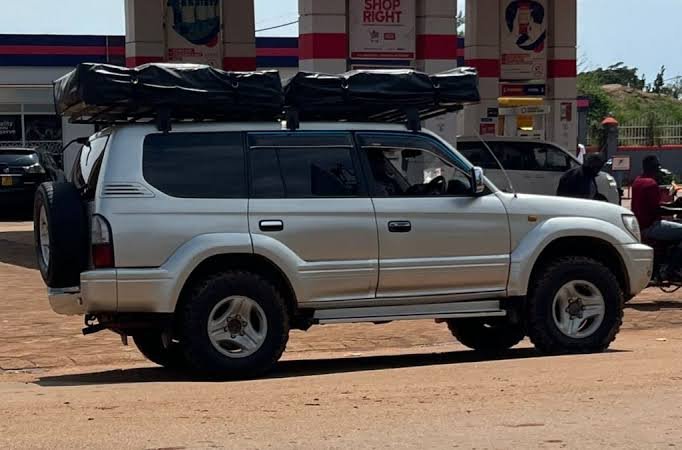
A Uganda safari van is typically a Toyota Land Cruiser safari minibus or a customised Toyota Hiace with a pop-up roof — a raised, hinged roof panel that elevates the entire roof section to create a standing viewing platform for all passengers simultaneously. Safari vans seat six to eight passengers in two rows facing forward or facing each other, with the elevated roof providing a panoramic 360-degree game viewing position when open. They are the standard vehicle type used by Uganda’s guided group tour operators, driven by professional tour drivers who manage the vehicle and the itinerary while passengers focus entirely on wildlife observation. A Uganda safari SUV — in the form of a Toyota Land Cruiser Prado, Toyota RAV4 Safari, or Toyota Land Cruiser V8 — is a four-by-four with a maximum of five to seven seats, a single roof hatch rather than a full pop-up roof, and a specification oriented toward off-road performance as much as passenger comfort. Self drive visitors operate SUVs independently, controlling their own route, pace, and stop decisions throughout the circuit. The two vehicles are designed for different primary users and different safari formats, and most of the comparison’s conclusions flow from this fundamental distinction.
Roof Game Viewing — Van’s Advantage for Groups
The pop-up roof is the safari van’s most compelling game viewing asset, and its advantage over the SUV’s single roof hatch is real and meaningful for groups of five or more passengers. When a safari van’s roof is raised on the open grassland of Queen Elizabeth National Park’s Kasenyi Plains or the northern bank circuit of Murchison Falls, all six or eight passengers can stand simultaneously with a 360-degree sightline across the landscape — every person in the vehicle sees the lion pride, the elephant herd, and the Uganda kob at the same moment without the queue for the single hatch that an SUV creates when more than two passengers want to view from the roof position. For guided group safaris where the experience is shared between a larger party, the safari van’s full-roof access is a genuine advantage that the SUV’s hatch cannot replicate. For couples, small families, or solo travellers — the primary users of Uganda’s self drive SUV fleet — the single roof hatch is entirely adequate, as the two people who need to view simultaneously can both access it without conflict, and the self drive format means the vehicle can be stopped and repositioned for the best viewing angle at the driver’s discretion rather than requiring a larger group to reach consensus.
Off-Road Capability — SUV’s Decisive Advantage
Uganda’s most rewarding safari destinations involve some of the most demanding approach roads in East Africa, and this is where the SUV’s engineering advantage over the safari van becomes decisive rather than marginal. The approach roads to Bwindi Impenetrable National Park’s Nkuringo and Rushaga sectors — steep, narrow, and significantly degraded in wet season — require the ground clearance, low-centre-of-gravity stability, and low-range four-wheel drive response of a Toyota Land Cruiser Prado or V8. A safari van attempting the Nkuringo descent faces immediate challenges: its higher body, longer wheelbase, and greater weight on a narrow escarpment track with steep drops and tight switchbacks creates approach conditions that experienced Uganda drivers manage very carefully and that inexperienced self drive visitors should not attempt in any vehicle without local guidance, let alone in a large-body van. The Murchison Falls delta tracks, the remote northern Kidepo Valley approach on Uganda’s most distant circuit, and the Semliki Valley’s escarpment descent all present terrain where the SUV’s shorter wheelbase, lower centre of gravity, and superior approach and departure angles make a practical difference to whether the vehicle completes the section without incident. For Uganda’s savannah park circuits — Queen Elizabeth’s main game tracks, Lake Mburo’s compacted circuits, Kibale’s tarmac approach — a well-maintained safari van handles the terrain adequately, and the off-road advantage of the SUV is less decisive. The full Uganda circuit that includes Bwindi, Murchison’s remote tracks, or Kidepo tilts the vehicle decision firmly toward an SUV with proper off-road specification.
Self Drive Suitability — No Contest
For self drive visitors driving their own safari vehicle without a professional tour driver, the SUV is unambiguously the right choice and the safari van is not appropriate for independent operation on Uganda’s roads. Safari vans are large vehicles optimised for professional drivers who manage them daily across Uganda’s national park road network — their dimensions, turning radius, and handling characteristics in tight situations require experience and familiarity that a self drive visitor arriving for a two-week circuit cannot reasonably be expected to have. An SUV in the form of a Prado or RAV4 handles in a manner that an experienced private driver from any country with comparable 4×4 experience can adapt to quickly — the dimensions are manageable, the parking is straightforward in Uganda’s town centres and park gate areas, and the driving position gives the self drive visitor the confidence and visibility to make independent routing and stopping decisions without anxiety. The self drive format — stopping when wildlife appears, repositioning for a better angle, departing the accommodation at dawn without waiting for a guide briefing — works naturally with the SUV’s driver-controlled format and is technically and practically incompatible with the safari van’s group dynamics and dimensions.
Capacity, Comfort, and Cost
For groups of five or more passengers, the safari van’s capacity advantage is real — the additional seats eliminate the need for two SUVs to carry the same group, which has both cost and logistical benefits for a large group travelling together. For the two to four passenger groups that characterise most self drive Uganda visitors, the Prado’s five seats and generous luggage capacity are entirely adequate, and the cost saving of an SUV daily hire rate over a safari van daily hire rate is meaningful across a ten-day circuit. Safari vans are typically priced at higher daily rates than even the Land Cruiser Prado, reflecting their greater passenger capacity and the driver costs that guide-operated van hire typically includes. For self drive visitors whose party size does not require the van’s capacity, the SUV delivers the same Uganda national park experience at a lower daily cost per vehicle and with the off-road specification that Uganda’s most rewarding destinations specifically require. Our best 4×4 car hire deals cover the full range of SUV options for Uganda self drive, from the Kibale Forest and Queen Elizabeth circuit to the demanding Bwindi and Kidepo extensions that reward the SUV’s full off-road specification. Browse our Uganda safari packages or contact our team today to confirm the right vehicle format for your group size, circuit, and self drive or guided tour preference.
Related posts

Leave a Comment