
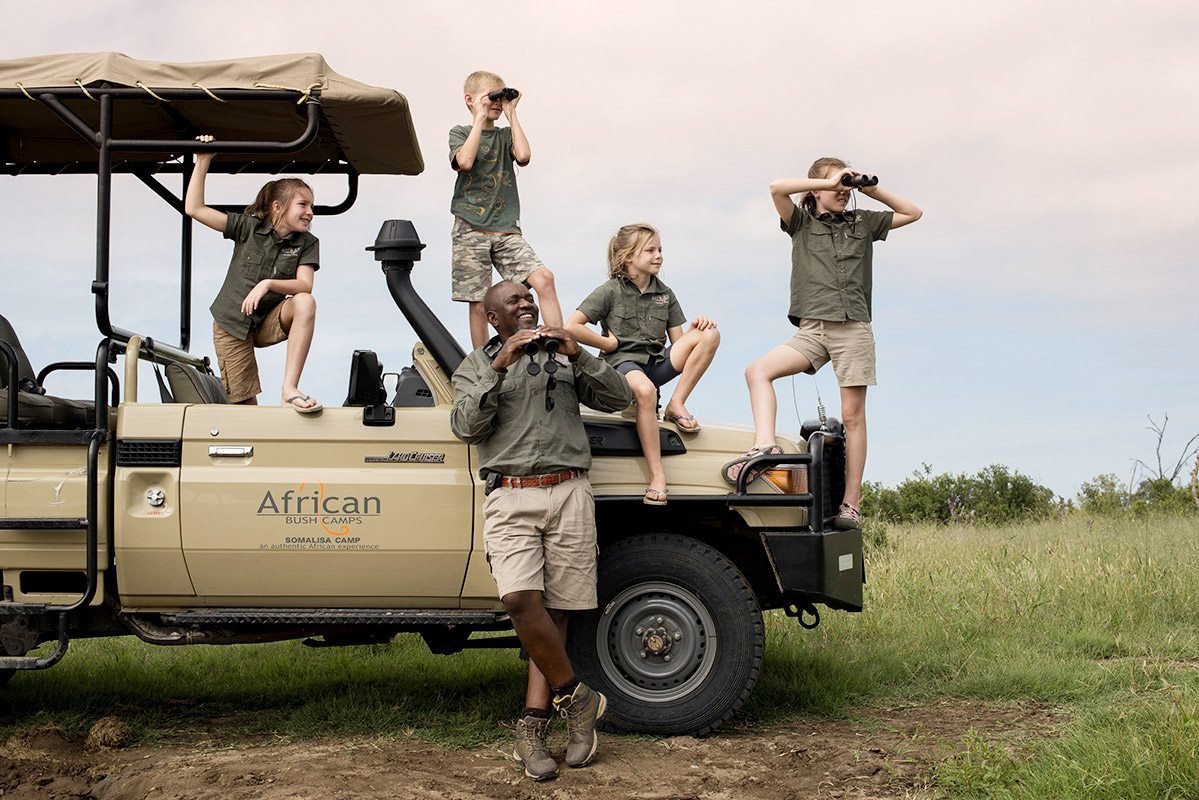
Best family safari vehicles.A family safari in Uganda and Rwanda places specific demands on the rental vehicle that a couple or solo traveller’s circuit does not — demands that go beyond the standard 4×4 capability requirements and into the practical realities of travelling with children across multi-day driving circuits in East Africa. Seating capacity that accommodates parents and children without crowding on a five-hour transfer from Lake Mburo to Queen Elizabeth. Luggage space that absorbs the additional gear that family travel requires alongside the safari kit. Window height and sightlines that allow children to see the elephants and lions without being lifted onto an adult’s lap at every game drive stop. Rear seatbelts for every occupied seat — a legal requirement in both Uganda and Rwanda and a safety requirement regardless of law. A roof hatch that allows wildlife viewing without the physical risk of small children standing unsupported on a moving vehicle’s viewing platform. And enough mechanical capability to handle Uganda’s gorilla trekking approach roads and national park game circuits without the vehicle becoming the anxious focus of the family’s attention when it should be on the wildlife. This guide covers the best family safari vehicles available for Uganda and Rwanda self drive, what each delivers for different family sizes and age groups, the age-specific considerations that shape activity planning around the vehicle choice, and the family self drive tips that make a Uganda circuit with children as rewarding as the equivalent adult-only circuit. Browse our Uganda and Rwanda self drive packages and car hire and self drive options for family vehicle availability and itinerary support.
The Toyota Land Cruiser Prado — Best All-Round Family Safari Vehicle
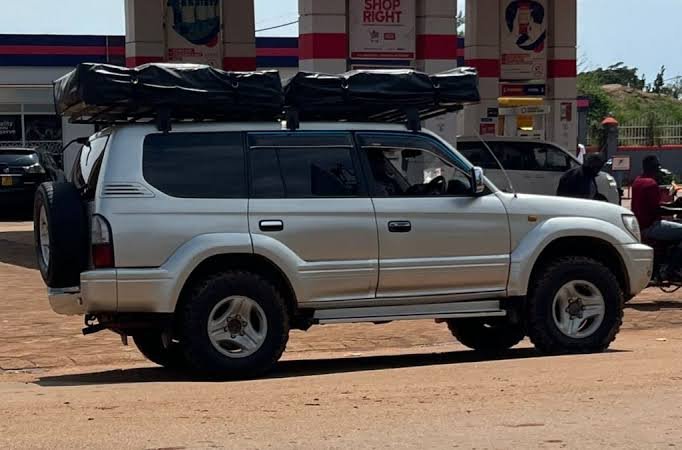
The Toyota Land Cruiser Prado is the finest family safari vehicle for Uganda and Rwanda self drive — a conclusion supported by every practical consideration that family travel adds to the standard safari vehicle assessment. The Prado’s interior in its full five to seven-seat configuration provides genuine rear passenger space for two to three children alongside two adults without the knees-to-chin compression that smaller SUVs impose on long transfer days, and its luggage area behind the rear seats absorbs the additional bags, pram or stroller where applicable, and child-specific equipment that families carry without spilling into the passenger space. The Prado’s window height in the rear seats is well-calibrated for children — significantly higher from the ground than a standard road car while still positioning windows at a height that allows children to see out independently without being held up by an adult. The roof hatch is accessible for supervised older children and teenagers during slow-moving game drive sections, delivering the game viewing elevation that makes the open grassland of Queen Elizabeth and the northern bank circuit of Murchison Falls so visually striking, while remaining closeable and secure when the vehicle is moving at transfer speed with young children inside. The Prado’s mechanical capability covers every Uganda circuit without compromise — Bwindi’s gorilla trekking approach roads, Murchison’s northern bank game tracks, and Queen Elizabeth’s mixed terrain game circuits are all handled with the confidence that removes any driver anxiety from the family’s attention during the moments when the road demands focus.
The Toyota Land Cruiser V8 — Best for Larger Families
For families of five or six — two adults and three to four children — the Toyota Land Cruiser V8 (Land Cruiser 200 series) is the appropriate family safari vehicle, providing the third row seating and greater interior volume that the Prado’s maximum five-seat configuration cannot match in Uganda’s most common layout. The V8’s third row seats create a physical separation between children that long transfer days make particularly valuable, and the greater cargo area accommodates the family gear load without requiring roof-mounted luggage solutions. The V8’s engine provides more torque than the Prado across Uganda’s most demanding terrain, which matters less on the straightforward circuits and more on the routes to Bwindi and the Semliki Valley where the approach sections test sustained low-range performance on steep and slippery gradients. The V8 carries a higher daily hire rate than the Prado, but for families whose size makes it the only vehicle that genuinely fits, the Prado’s lower rate does not compensate for the discomfort and luggage compromise of trying to fit five or six people into it for a ten-day circuit. Our self drive fleet includes Land Cruiser V8 configurations suited to larger family circuits.
The Toyota RAV4 Safari — For Small Families on Lighter Circuits
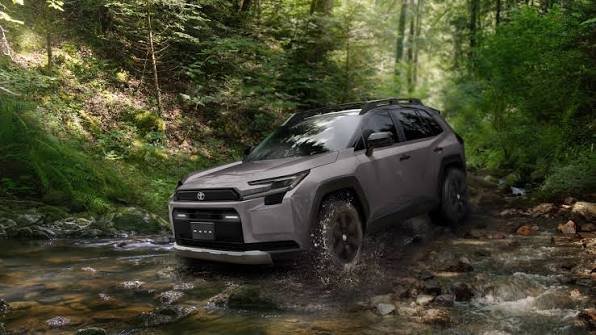
For families of two adults and two young children, the Toyota RAV4 Safari is a viable and more economical family option on circuits that do not include Bwindi’s most demanding sectors or Murchison’s remote tracks. The RAV4’s five seats accommodate a compact family without space pressure, its lower step height makes getting young children in and out easier than from the Prado’s higher sill, and its lower daily hire rate and better fuel economy make it the more cost-effective family vehicle across Rwanda’s national park circuit and Uganda’s more accessible parks. The RAV4 is the right family vehicle for a Rwanda self drive covering Volcanoes, Akagera, and Nyungwe, and for Uganda circuits centred on Queen Elizabeth and Kibale Forest in the dry season. The RAV4 becomes the wrong family vehicle choice when the circuit includes Bwindi’s Rushaga or Nkuringo sectors, Murchison’s delta tracks in wet conditions, or any of Uganda’s more remote national park access roads where the Prado’s greater off-road capability is not a comfort upgrade but a practical necessity.
Age-Specific Considerations — Children of Different Ages
The age range of children in the family shapes the vehicle choice and the circuit design in ways that are important to address before booking. Infants and toddlers travelling with car seats require a vehicle whose rear seat mounting points accept international car seat designs — both the Prado and V8 accommodate standard ISOFIX car seat systems in the rear seats, and this should be confirmed with the rental company at the time of booking rather than assumed. Children under five travelling on Uganda and Rwanda safari circuits need additional planning around transfer day length — the five and six-hour driving days that adult circuits accept without disruption are genuinely challenging for very young children, and itineraries for families with toddlers should be structured with shorter daily driving distances and more frequent stops than an adult-only circuit would plan. Children between five and twelve can engage meaningfully with game drives, boat cruises, and the landscape of Uganda and Rwanda’s national parks without the physical activity limitations of younger children — the Kazinga Channel boat cruise and the Murchison Falls Nile cruise are typically among the most engaging Uganda safari activities for children in this age range. Teenagers from fifteen upward meet the minimum age requirement for gorilla trekking at Bwindi and at Volcanoes National Park in Rwanda — Uganda Wildlife Authority and Rwanda Development Board both require trekkers to be at least fifteen years old — and for families with older children, gorilla trekking becomes one of the defining experiences of the circuit rather than an adults-only activity that younger siblings sit out.
Family Self Drive Tips for Uganda and Rwanda
Several self drive habits specifically benefit families travelling with children in Uganda and Rwanda. Building rest stops into every transfer day — particularly afternoon stops that coincide with the rainy season’s predictable 2pm to 4pm rainfall window — allows children to stretch, eat, and decompress in ways that make the second half of the driving day significantly more manageable than the first. Keeping a dedicated family snack supply in the vehicle’s rear cabin — accessible without stopping — addresses the hunger management that children’s metabolisms demand on long game drive mornings when the nearest restaurant is forty minutes from the current game drive position. Assigning each child a wildlife observation responsibility — one tracks the birds, one watches the horizon for large mammals — converts the waiting period between sightings into engagement rather than boredom. The roof hatch should be used by children only when the vehicle is stationary or moving at very slow game drive speed with an adult present at the hatch — never during road transfers. Browse our best 4×4 car hire deals and Uganda safari packages, or contact our team today to configure a family safari vehicle and circuit with the right capacity, capability, and itinerary pacing for your family’s ages and interests.
Related posts

Leave a Comment