
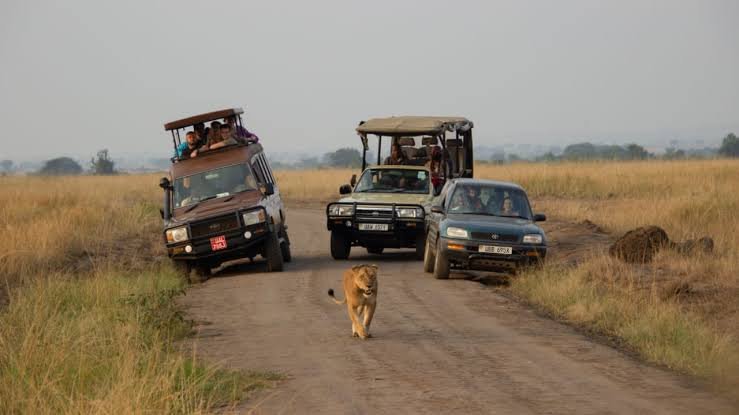
Kigali to queen Elizabeth national park.The drive from Kigali to Queen Elizabeth National Park is one of the great cross-border self drive journeys in East Africa — a route that begins in Rwanda’s immaculate capital, crosses the Katuna–Gatuna border into Uganda’s southwestern highlands, passes through the dramatic crater lake and highland scenery of Kabale and the Kigezi region, and arrives at Uganda’s most diverse and most visited national park for Kazinga Channel boat cruises, Kasenyi Plains game drives, and the tree-climbing lions of the Ishasha sector. The full journey from Kigali to the main Queen Elizabeth visitor area at Mweya covers approximately 380 to 420 kilometres depending on routing, and the drive — including the border crossing and a lunch stop — takes seven to nine hours of total travel time. It is a long day by most African self drive standards, and the visitors who pace it correctly by stopping at Lake Bunyonyi or Kabale for a night before the Queen Elizabeth approach arrive at the park rested and ready for the wildlife experiences that make the journey worthwhile. This complete guide covers both routing options, the Katuna–Gatuna crossing, the Uganda drive through Kabale and Mbarara, what Queen Elizabeth offers as a self drive destination, vehicle requirements, and how to build this cross-border route into a Rwanda and Uganda circuit. Browse our 10-day Rwanda Uganda safari and car hire and self drive options for the vehicle and itinerary frameworks that make this route work.
The Two Routing Options — Which One to Take
Two border crossings connect Rwanda with Uganda’s Kabale region, and both serve the Kigali to Queen Elizabeth route. The Katuna–Gatuna crossing in the south is the more direct and the better choice for Kigali to Queen Elizabeth — from Kigali city centre to the Katuna border post is approximately 85 kilometres on a good tarmac road through Rwanda’s rolling southern highlands, a drive of one hour to one and a half hours, after which the crossing itself delivers you 8 kilometres from Kabale town on the Uganda side. From Kabale, the route continues west and northwest toward Mbarara and then toward Kasese and the northern Queen Elizabeth entrance, or southwest toward Ishasha for the park’s southern sector. The Cyanika crossing in the northwest — which connects Musanze to Kisoro — adds approximately 130 kilometres and two hours to the total journey from Kigali to Queen Elizabeth, routing through Kisoro and Kabale on a longer arc that covers more dramatic scenery but makes a single-day transfer to Queen Elizabeth very long indeed. For Kigali to Queen Elizabeth in the most efficient routing, Katuna–Gatuna is the correct choice. The Cyanika route is better saved for itineraries that include a Bwindi gorilla trek on the Uganda approach, where the Kisoro routing connects logically to Bwindi Impenetrable National Park’s southern sectors before continuing to Queen Elizabeth.
The Katuna–Gatuna Border Crossing
The Katuna–Gatuna crossing is the most commonly used border between Rwanda and Uganda for safari visitors, and it is well-equipped for tourist self drive vehicles in both directions. From Kigali, the road south toward Butare and Huye passes through Rwanda’s gently rolling southern landscape and reaches the Gatuna side of the crossing after approximately one and a half hours of pleasant driving. At the crossing, exit Rwanda at the Rwanda Immigration post, proceed through the neutral zone, and enter Uganda at the Uganda Immigration post — presenting your passport, driving licence, International Driving Permit, vehicle registration, hire company cross-border authorisation letter, and East African Community yellow card insurance certificate to the officials on both sides. The full process takes thirty to sixty minutes with a complete document set. The critical adjustment at the Uganda side is the traffic direction switch — Rwanda drives on the right, Uganda drives on the left, and the transition must be made consciously and deliberately as you depart the Uganda Immigration compound. From the crossing, the road continues eight kilometres to Kabale town, where fuel, ATMs, restaurants, and accommodation are all available for visitors stopping overnight before the Queen Elizabeth approach.
Lake Bunyonyi — The Recommended Midpoint Stop
Rather than completing the full Kigali to Queen Elizabeth drive in a single exhausting day, the most experienced self drive visitors on this cross-border route spend a night at Lake Bunyonyi — a spectacularly scenic highland lake six kilometres west of Kabale, set among steep, island-scattered hills at 1,962 metres above sea level and consistently rated as one of Uganda’s most beautiful destinations. Lake Bunyonyi is an easy detour from the main Kabale road, and the range of accommodation on its shores — from simple community guesthouses and campsites to comfortable midrange lodges with lake views — makes it an affordable and atmospheric overnight stop in any budget category. Arriving at Lake Bunyonyi in the late afternoon from Kigali after a manageable five to six hour drive, and departing early the following morning for Queen Elizabeth, converts a single very long day into two comfortably paced driving days with a memorable highland lake experience between them. The morning departure from Lake Bunyonyi through Kabale and west toward Mbarara takes approximately four to five hours to Mweya, passing through the southwestern Uganda landscape of rolling hills, open cultivation, and the progressively flatter terrain approaching the Albertine Rift that signals the approach to Queen Elizabeth’s savannah country.
The Road from Kabale to Queen Elizabeth
From Kabale, the main road to Queen Elizabeth runs west through Ntungamo and Mbarara — Uganda’s largest southwestern town and the main fuel and supply stop on this route — before continuing northwest toward Kasese on the road that skirts the northern edge of Queen Elizabeth National Park and delivers visitors to the park’s northern entrance and the Mweya Peninsula where the principal visitor infrastructure, Uganda Wildlife Authority headquarters, and the famous Kazinga Channel jetty are located. The total distance from Kabale to Mweya is approximately 290 kilometres on predominantly good tarmac with some rougher sections on the approach through the park’s northern corridor. Mbarara is the essential fuel and supplies stop — fill up completely here and carry any supplies you may want for the evening at Mweya before the game park approach, as commercial services inside and immediately adjacent to the park are limited. The road through the northern Queen Elizabeth approach descends progressively from Uganda’s southwestern highland plateau into the Albertine Rift lowland — the landscape opens, the vegetation changes from highland green to savannah brown, and wildlife begins appearing roadside as the tarmac enters the park’s boundary and the Kasenyi Plains spread to the south.
What Queen Elizabeth Offers as a Self Drive Destination
Queen Elizabeth National Park is Uganda’s most species-diverse national park — over 95 mammal species and more than 600 bird species within a single park — and its combination of open savannah game drives, channel boat cruise, chimpanzee tracking, and tree-climbing lion encounters makes it the most activity-rich destination on the Uganda self drive circuit. The Kasenyi Plains in the north deliver the classic savannah game drive experience: lion prides resting in open grassland, elephant herds moving between the plains and the lakeshore, large Uganda kob populations providing the prey base, and buffalos, topis, warthogs, and mongooses completing an extraordinarily busy landscape. The Kazinga Channel boat cruise from the Mweya jetty is Queen Elizabeth’s signature activity — a two-hour guided cruise through the channel connecting Lake George and Lake Edward, passing hippo pods of extraordinary size, Nile crocodiles on the banks, and waterbirds in numbers that make it one of the finest single wildlife boat experiences in Africa. The Ishasha sector in the park’s south is a separate drive of approximately ninety minutes from Mweya, famous for the fig tree-climbing lion behaviour unique to this corner of Uganda — lions lounging in the branches of ancient fig trees in a posture that no Serengeti guide book prepares you for. The Kyambura Gorge on the park’s eastern edge provides chimpanzee tracking in a dramatic forest-filled rift that drops suddenly from the open savannah plain above — a contrast of landscapes within a single park that Queen Elizabeth alone in Uganda delivers.
Vehicle Requirements and Circuit Planning
A Toyota Land Cruiser Prado is the recommended vehicle for the Kigali to Queen Elizabeth cross-border route — not because the main roads between Kigali and Mweya require it, but because a cross-border circuit that includes Queen Elizabeth almost always extends to Bwindi for gorilla trekking, and Bwindi’s sector approach roads require the Prado’s greater capability regardless of what Queen Elizabeth’s well-maintained game tracks demand. For visitors whose circuit is genuinely Queen Elizabeth only without a Bwindi extension, a Toyota RAV4 Safari from our self drive fleet covers the Kasenyi Plains game tracks and the Kazinga Channel approach comfortably in the dry season. The circuit that makes best use of the Kigali departure point combines Nyungwe Forest National Park in Rwanda’s southwest as a first stop — two to three hours from Kigali on the road toward Huye — before crossing at Katuna–Gatuna into Uganda for Queen Elizabeth, Bwindi gorilla trekking, and the return to Kigali via the Cyanika crossing. Our 10-day Rwanda Uganda safari uses precisely this framework, and our gorilla trekking safaris team supports permit booking for the Bwindi leg. Browse our full Uganda and Rwanda self drive packages and best 4×4 car hire deals, or contact our team today to plan your Kigali to Queen Elizabeth self drive with the right ve
Related posts

Leave a Comment