
How to plan a self drive safari in Uganda.Planning a self drive safari in Uganda is one of the most exciting things you can do as a traveller — and one of the most rewarding when it all comes together on the road. Uganda is a compact country, but it punches well above its weight in wildlife, scenery, and raw natural drama. From the mountain gorilla forests of the southwest to the thundering falls of the Nile in the north, the country offers a network of extraordinary national parks that are genuinely accessible by self drive. The key is getting the planning right before you set off. This guide walks you through every step you need to take to plan a self drive safari in Uganda that is safe, well-organised, and utterly unforgettable.
Choose the Right Time of Year for Your Uganda Self Drive Safari
Timing matters enormously when it comes to self drive safaris in Uganda, and the time of year you visit will shape everything from road conditions to wildlife sightings and permit availability. Uganda has two main dry seasons — June to September and December to February — and these are widely considered the best times for self drive travel. Roads are firmer, tracks inside national parks are more passable, and wildlife tends to concentrate around water sources, making game drives more productive.
That said, Uganda’s green seasons from March to May and October to November have their own appeal. The landscape is lush and dramatically photogenic, bird watching reaches its peak as migratory species arrive, and accommodation rates drop considerably. The trade-off is that some tracks — particularly the final approaches to Bwindi Impenetrable National Park and the more remote sectors of Murchison Falls — can become very challenging after heavy rain, making a capable 4×4 with good tyres even more essential during these months.
Select Your Self Drive Route and National Parks
Once you have settled on your travel dates, the next step is deciding which parks to include and in what order. Uganda’s national parks cluster broadly into three regions — the northwest (Murchison Falls), the west (Queen Elizabeth, Kibale, Bwindi, Mgahinga), and the remote northeast (Kidepo Valley) — and most self drive itineraries focus on either the western circuit or a combination of northwest and west.
A classic western Uganda self drive circuit takes you from Kampala south to Queen Elizabeth National Park for big game and tree-climbing lions, then on to Kibale Forest National Park for chimpanzee tracking, before finishing with gorilla trekking at Bwindi Impenetrable Forest. Our 5-day Uganda safari covers these highlights efficiently, while our 7-day best of Uganda tour adds more depth and breathing room at each park. If you want to extend further into Rwanda, our 10-day Rwanda Uganda safari maps out a seamless cross-border itinerary.
Book Your Gorilla and Chimpanzee Permits as Early as Possible
This step cannot be emphasised strongly enough — book your gorilla trekking and chimpanzee tracking permits as far in advance as possible, ideally three to six months before your travel dates. Uganda Wildlife Authority issues a strictly limited number of gorilla trekking permits per gorilla family per day at Bwindi and Mgahinga, and these sell out rapidly during peak season. A gorilla permit currently costs $800 USD per person for foreign non-residents and is non-refundable if you miss your trek date.
Chimpanzee tracking permits at Kibale Forest are somewhat easier to secure but are also subject to daily limits and should not be left to chance. When booking your permits, you will need to nominate a specific date, the trekking sector (for Bwindi), and the time of your trek — all of which will shape the rest of your daily itinerary and overnight stops. Our gorilla trekking safaris page has full details on how to secure permits and what to expect on trekking day, and our popular 3-day Uganda gorilla trekking package is a great option if you want an expert-guided framework to build your self drive around.
Choose the Right Self Drive Vehicle for Uganda’s Roads
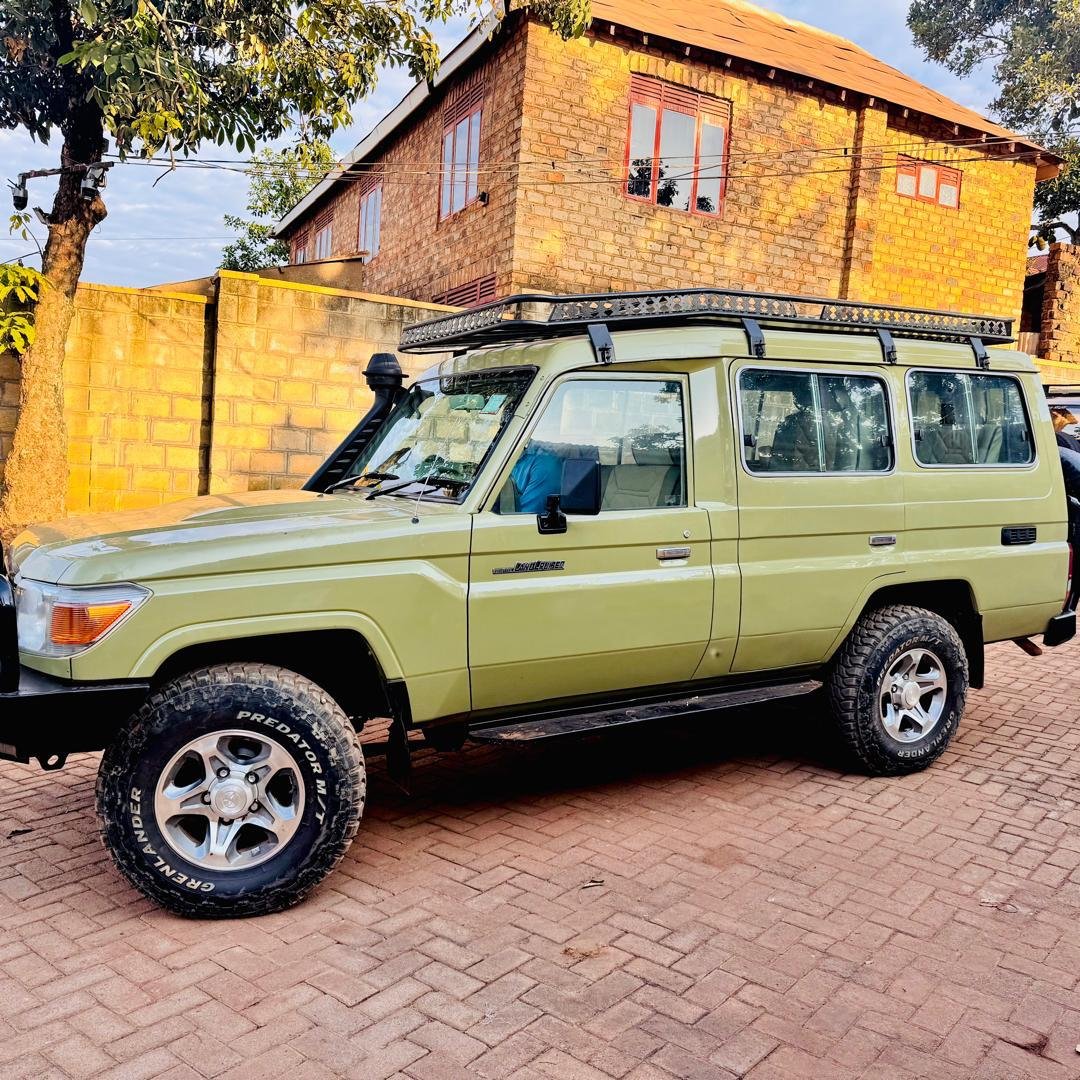
Selecting the right vehicle is one of the most consequential decisions in your entire planning process. Uganda’s national park tracks vary enormously in condition — some are well-graded gravel roads suitable for most vehicles in the dry season, while others are steep, deeply rutted, and genuinely treacherous without the right 4×4. The final approaches to Bwindi, the Ishasha sector of Queen Elizabeth, and any route into Kidepo Valley all require a high-clearance four-wheel-drive vehicle with robust tyres and sufficient ground clearance.
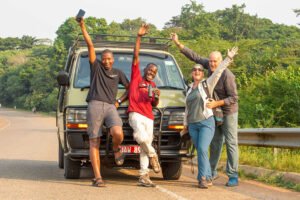
A Toyota Land Cruiser is the gold standard for Uganda self drive safaris and what most experienced travellers recommend for longer, multi-park itineraries. For shorter trips or smaller groups, a Toyota RAV4 Safari edition handles Uganda’s terrain well and offers excellent fuel economy. Browse our full vehicle fleet to find the right model for your group size and budget, and check our latest 4×4 car hire deals for Uganda and Rwanda for the most competitive rates. Every vehicle we hire out comes with GPS, a spare tyre, an emergency kit, and comprehensive insurance.
Plan Your Accommodation Along the Route
Uganda offers a wide range of accommodation options along its main self drive routes, from community bandas and budget guesthouses to luxury tented camps perched on the edges of crater lakes and national park boundaries. Planning your overnight stops in advance is important — particularly near Bwindi and Queen Elizabeth, where the best lodges book up months ahead during peak season.
As a general rule, aim to book your accommodation before you finalise your daily driving schedule, since the distance between parks combined with rough road conditions means you need to be realistic about how far you can comfortably travel in a day. Staying inside or directly adjacent to national parks keeps driving distances manageable and maximises your time on game drives. For self drive travellers combining Uganda with Rwanda, our 4-day wildlife and primate safari gives a useful reference for pacing your overnight stops on a typical western Uganda circuit.
Sort Your Documents and Cross-Border Requirements
If your self drive safari takes you across the border into Rwanda — or vice versa — there are a few important document requirements to sort well before departure. You will need a valid passport with at least six months remaining validity, a Uganda tourist visa (available on arrival or through the e-visa portal at visas.immigration.go.ug), and comprehensive vehicle insurance that covers both countries. All vehicles hired through Self Drive Safaris Uganda come with the necessary cross-border permits, so you will not need to arrange vehicle documentation separately.
It is also worth carrying printed copies of your gorilla and chimpanzee permit confirmations, as ranger stations at some park gates request them on arrival. If you are flying into Entebbe, our airport transfer and vehicle handover service ensures your 4×4 is ready and fully briefed the moment you land, so your safari begins without delay.
What to Pack for a Self Drive Safari in Uganda
Packing smart for a Uganda self drive safari makes a genuine difference to your comfort and enjoyment on the road. The essentials include neutral-coloured clothing in layers — mornings and evenings in Uganda’s highlands can be surprisingly cold even close to the equator, while afternoons on the savannah can be hot. Waterproof gear is important year-round given Uganda’s unpredictable forest microclimates, and sturdy, ankle-supporting boots are required for gorilla and chimpanzee trekking.
Practical vehicle supplies to carry include a paper map as a backup to GPS, a first-aid kit, a torch, a power bank, a portable cooler stocked with water and snacks, and enough cash in Ugandan Shillings for fuel, park entry fees, and roadside purchases. Fuel up at every reliable town before entering any national park — Fortportal for Kibale, Kabale for Bwindi, and Masindi for Murchison Falls are the key fuel stops on the main self drive routes.
Budget Wisely for Your Uganda Self Drive Safari
Uganda is not the cheapest safari destination in Africa, but it offers extraordinary value when you consider the exclusivity and intimacy of the experiences available. The biggest single cost is the gorilla trekking permit at $800 USD per person, followed by park entry fees — currently $40 USD per person per day for most major parks. Vehicle hire, fuel, accommodation, and meals are all very reasonably priced by international standards.
A mid-range self drive safari combining Bwindi, Queen Elizabeth, and Kibale over seven days typically costs between $1,500 and $2,500 per person all-in, excluding the gorilla permit. Luxury options with premium tented camps can run significantly higher, while budget travellers staying in community lodges and self-catering can do the same route for considerably less. Our 5-day Uganda primate tour and the comprehensive 10-day Uganda primates and wildlife itinerary from Pick and Transfer Safaris offer useful benchmarks for budgeting across different trip lengths.
Start Planning Your Self Drive Safari in Uganda Today
A well-planned self drive safari in Uganda is one of the most genuinely special travel experiences in the world — the kind of trip that changes the way you see wild places and your own place within them. With the right vehicle, the right permits booked in advance, and a clear route in mind, the open roads of Uganda are yours to explore entirely on your own terms. Browse our full range of Uganda self drive safari options, explore our safari packages for itinerary inspiration, or get in touch with our team to start building your personalised Uganda adventure today.
Related posts

Leave a Comment