
Visiting Kisoro on a self drive safari.Kisoro is one of Uganda’s most visually dramatic small towns — a compact frontier settlement at approximately 1,890 metres above sea level in Uganda’s far southwestern corner, set directly beneath the Virunga volcano chain whose three Uganda-side peaks, Muhabura, Gahinga, and Sabyinyo, rise steeply from the town’s southern edge in a wall of forested volcanic ridgelines that defines Kisoro’s entire visual character. The volcanoes are not a distant backdrop — they are immediate and present, visible from the town centre streets, the accommodation terraces, and the road into town in a way that makes Kisoro’s setting unlike any other town on the Uganda safari circuit. For self drive visitors, Kisoro is the access point for Mgahinga Gorilla National Park 14 kilometres from town, Bwindi Impenetrable National Park’s Nkuringo sector to the northeast, and the Cyanika border crossing into Rwanda — making it a natural junction for cross-border circuits linking Uganda’s and Rwanda’s Virunga gorilla habitats. This guide covers the drive to Kisoro, the town and its volcanic backdrop, Lake Mutanda, the Mgahinga circuit, the Cyanika crossing, and the vehicle requirements for the roads Kisoro serves as the base for. Browse our gorilla trekking safaris and car hire and self drive options for planning support.
Getting to Kisoro — The Drive from Kabale and Entebbe
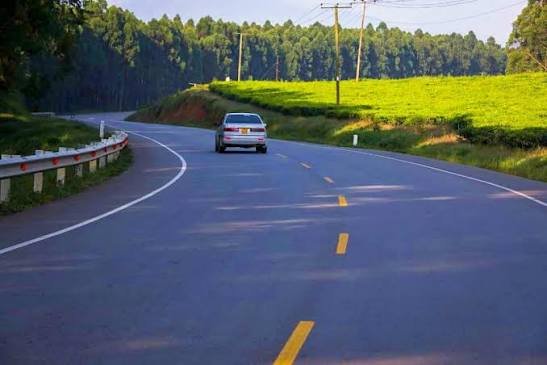
The most common approach to Kisoro for self drive visitors is from Kabale, which lies approximately 95 kilometres to the east on a road that traverses some of southwestern Uganda’s most scenic highland terrain. The Kabale to Kisoro drive takes approximately two hours on a route that is predominantly tarmac with some rougher sections near the valley approaches — a well-managed road by Uganda’s western standards, accessible in a Toyota RAV4 Safari or Toyota Land Cruiser Prado without difficulty. The scenery along this road builds progressively as the distance from Kabale increases: the terraced hillsides of Kabale district give way to deeper valleys, narrower passes, and eventually the widening Kisoro basin where the Virunga volcanoes emerge on the southern horizon first as shapes through the highland haze and then as the full volcanic silhouette that announces Kisoro’s approach. The final descent into the Kisoro basin is one of Uganda’s better self drive arrival moments — the volcanoes appearing at full height as the road drops from the ridgeline into the flat basin floor. From Entebbe or Kampala, Kisoro is approximately 505 kilometres on the route through Masaka, Mbarara, and Kabale — a full driving day of eight to nine hours that most visitors sensibly break with an overnight in Kabale or at Lake Bunyonyi rather than attempting as a single push. Fuel in Kisoro is available from petrol stations in the town centre and should be topped up before departing for Mgahinga or Nkuringo, as neither park supplies fuel and the murram approach roads add to consumption.
The Virunga Backdrop — Kisoro Town by Car
Kisoro town itself is worth more than the transit-stop treatment that many safari itineraries give it, and a morning spent driving its immediate surroundings — including the roads that approach the Virunga foothills south of town — delivers an understanding of the landscape that the accommodation terrace view alone does not convey. The road that leads south from Kisoro toward the Mgahinga park gate passes through the flat farmland of the Kisoro basin with the volcanoes rising directly ahead, and even the first five kilometres of this drive constitute one of Uganda’s most photogenic road approaches anywhere on the western circuit. Kisoro’s town centre has basic amenities sufficient for a multi-night safari base — fuel, markets, accommodation ranging from budget guesthouses to mid-range lodges, and the essential provisions for a self drive visitor heading into Mgahinga or Nkuringo for an early morning trek. The town’s frontier character — its position at Uganda’s southwestern extremity, the visible presence of the volcanoes, and the proximity of three international borders within forty kilometres — gives it a geographical intensity that the casual transit stop does not allow time to absorb.
Mgahinga Gorilla National Park — The Primary Destination
Mgahinga Gorilla National Park is 14 kilometres from Kisoro on a murram road that requires a 4×4 — twenty to thirty minutes in dry season conditions and up to forty-five minutes in wet season. The park gate at Ntebeko is where vehicles park for the trek; self drive visitors drive themselves to the gate rather than relying on a transfer. The trekking briefing begins at 8am, which from Kisoro means a 7am departure — most Kisoro accommodation will prepare an early breakfast for trekking guests on request. Mgahinga is home to one habituated gorilla family, the Nyakagezi group, whose accessibility depends on their current location within the park boundaries on any given day. When resident, the Mgahinga gorilla trek is as powerful as the equivalent experience at Bwindi’s most visited sectors, and the maximum eight-person group limit applies here as throughout Uganda’s programme. Permits must be booked through Uganda Wildlife Authority in advance — Mgahinga’s single family means a single daily allocation that sells out despite the park’s lower visitor numbers.
Golden Monkey Tracking — Mgahinga’s Second Signature Activity
Golden monkey tracking is one of Uganda’s most underrated primate safari experiences and Mgahinga is the only place in Uganda where it is available — a compelling reason for a Kisoro stay even for visitors who have already completed gorilla trekking at Bwindi. The golden monkey is a Virunga endemic primate, a brilliantly coloured species with orange-gold body patches and a face framed by dark fur, that inhabits the bamboo forest zone of the Virunga volcanoes. Mgahinga’s habituated golden monkey troop is tracked in the bamboo zone at the park’s lower elevations, typically within a two-hour walk of the trailhead. The tracking experience lasts one hour with the habituated troop and — unlike gorilla trekking, which operates at fixed morning times — golden monkey tracking can often be arranged for later morning departures, making it combinable with a gorilla trek on consecutive days from the same Kisoro base. Our 5-day Uganda primate tour includes gorilla trekking and can be extended to incorporate golden monkey tracking at Mgahinga for visitors based in Kisoro.
Lake Mutanda — Kisoro’s Most Rewarding Nearby Drive
Lake Mutanda is the most immediately rewarding driving destination in Kisoro’s immediate vicinity and one of Uganda’s most visually extraordinary lakes — a high-altitude lake at approximately 1,800 metres whose shoreline is backed by the Virunga volcanoes to the south, creating a reflection backdrop that produces some of the most photographed lake views in the entire country. The drive from Kisoro to Lake Mutanda covers approximately eight kilometres on a road that skirts the lake’s northern shore before reaching the accommodation and community access points at the water’s edge. The combination of the lake surface, the island vegetation, and the volcanic peaks rising behind makes this one of the few Uganda destinations where the drive itself is as rewarding as the arrival — the views open progressively as the road approaches the shore. Boat hire is available at the lake for island visits and paddling excursions, and the lake’s setting makes a Mutanda afternoon one of the most restful ways to fill the hours between a morning trek at Mgahinga and the following day’s early departure.
The Cyanika Border Crossing — Uganda to Rwanda
The Cyanika border crossing is approximately 12 kilometres from Kisoro on the road south toward Rwanda, connecting Uganda’s Kisoro district directly with Rwanda’s Musanze district and — 14 kilometres beyond the border — with the headquarters area for Rwanda’s Volcanoes National Park. For self drive visitors on cross-border circuits that include gorilla trekking on both sides of the Virunga range, Kisoro is the Uganda gateway for the Cyanika crossing: a self drive visitor who treks at Mgahinga one day can cross at Cyanika the following morning and be in position for a Volcanoes National Park gorilla trek the day after. The crossing requires all the standard vehicle documentation — logbook or ownership letter, valid driving licence, Third Party Insurance for both countries, and a yellow fever certificate for personal entry. Uganda uses left-hand traffic and Rwanda uses right-hand traffic, and the driving adjustment at Cyanika is the point at which cross-border self drive visitors must make this transition. Our 10-day Rwanda Uganda safari uses the Cyanika crossing as part of the circuit structure.
Bwindi Nkuringo Sector — The Road from Kisoro
The Bwindi Impenetrable National Park Nkuringo sector is approximately 35 kilometres from Kisoro — closer from Kisoro than from Kabale — but the approach road is Bwindi’s most physically demanding self drive route: a steep escarpment ascent and descent with tight switchbacks, significant gradients, and road surfaces that are deeply challenging in wet season. A Toyota Land Cruiser Prado is the minimum appropriate vehicle for the Nkuringo approach regardless of season; the Toyota RAV4 Safari should not be used for this sector. Visitors based in Kisoro who hold Nkuringo sector gorilla trekking permits should allow ninety minutes for the drive despite the relatively short distance, and should confirm road conditions with local accommodation before the morning departure.
Vehicle Requirements for the Kisoro Circuit
A Toyota Land Cruiser Prado from our self drive fleet is the right vehicle for any Kisoro-based circuit that includes the Mgahinga gate road, the Nkuringo sector approach, or travel during the wet season. A Toyota RAV4 Safari handles the Kabale to Kisoro drive, the town itself, and the Lake Mutanda road in dry conditions but should not be used for Nkuringo and only with caution for the Mgahinga gate road in wet conditions. Browse our best 4×4 car hire deals or contact our team today to plan a Kisoro self drive safari with the right vehicle for the Virunga circuit and the permits timed to match your travel dates.
Related posts

Leave a Comment