
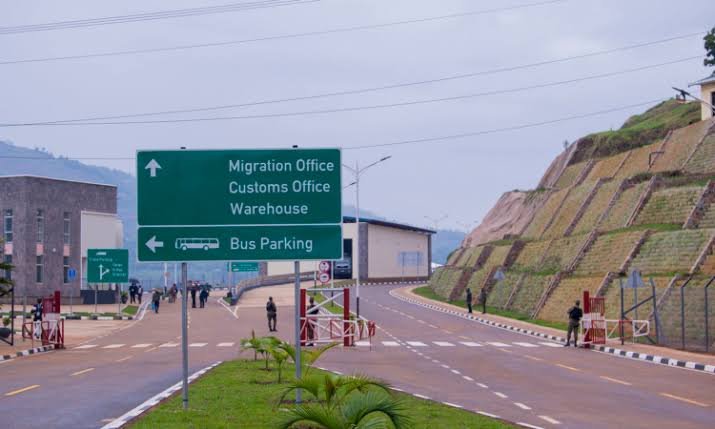
Katuna border crossing guide.The Katuna–Gatuna border crossing is the most frequently used entry point between Uganda and Rwanda for self drive tourists — a well-organised, relatively efficient crossing that connects Uganda’s Kabale highlands and Lake Bunyonyi with Rwanda’s southern region and the main road to Kigali. On the Uganda side the crossing is known as Katuna; on the Rwanda side it is Gatuna. The two names refer to the same physical border post, and self drive visitors will encounter both in signage, online resources, and hire company documentation depending on which side of the border the information originates from. The crossing sits at approximately 1,500 metres above sea level in the Kigezi highlands, surrounded by the tea estates and terraced farmland that characterise both sides of this southwestern Uganda and northern Rwanda border zone. This complete guide to the Katuna–Gatuna crossing covers the approach roads from both directions, the crossing process in detail, document requirements, practical logistics, and how it fits into the wider Uganda Rwanda self drive circuit.
Where Katuna-Gatuna Is and Why Self Drivers Use It
The Katuna–Gatuna border post sits on the main road connecting Kabale in southwestern Uganda with Kigali in Rwanda — a road that is the most direct and most important tourist corridor between the two countries. For self drive visitors routing from Uganda’s Kigezi highlands into Rwanda, or from Rwanda into Uganda’s southwest, this crossing is the natural choice because it connects two of the most important tourism hubs on the cross-border circuit. Kabale on the Uganda side is the main town serving Lake Bunyonyi and a key staging point for the drive to Bwindi Impenetrable National Park. Kigali on the Rwanda side is the country’s capital and its main hub for Volcanoes National Park, Nyungwe Forest, and Akagera National Park. The crossing is also the most logical entry point for self drive visitors who have spent time at Lake Bunyonyi and are now entering Rwanda for the first time, or for Rwanda-based visitors crossing north into Uganda for the Kabale and Bwindi circuits. Our 10-day Rwanda Uganda safari uses the Katuna–Gatuna crossing as the standard cross-border point for circuits that route through Kabale and Lake Bunyonyi.
The Approach from Uganda — Kabale to Katuna
The drive from Kabale town to the Katuna border post covers approximately 13 kilometres on tarmac heading south on the main Kabale to Katuna road — a short, straightforward drive through the highland farmland on the edge of Kabale’s urban area that takes fifteen to twenty minutes in normal conditions. Kabale is the last significant Uganda town before the border and the right place to handle any Uganda-side logistics before crossing — fill up with fuel at one of Kabale’s reliable fuel stations, withdraw Uganda shillings from a bank ATM if you still need local currency for any final Uganda payments, and confirm your document wallet is complete and accessible before the fifteen-minute drive to the gate. The road from Kabale to Katuna is in good condition and presents no driving challenges. On arrival at the Katuna gate, follow signs for the tourist vehicle lane where one exists, or join the general vehicle queue and wait for customs and immigration processing to begin. The crossing infrastructure at Katuna is well-maintained and includes a one-stop border post system that processes Uganda exit and Rwanda entry formalities in a single combined facility, reducing the historic requirement to queue on both sides of the physical border.
The Crossing Process at Katuna-Gatuna
The Katuna–Gatuna crossing operates a one-stop border post system where Uganda exit and Rwanda entry immigration and customs formalities are completed in a single facility without requiring the vehicle to physically cross and then stop again on the Rwanda side. The process begins at the Uganda exit side: present your passport to immigration for an exit stamp, present the vehicle’s registration certificate and your rental company’s cross-border authorisation letter to customs for clearance, and receive the Uganda departure documentation. Move the vehicle forward to the Rwanda entry side of the same facility: present your passport for Rwanda entry stamping or visa on arrival processing depending on your nationality, present the vehicle registration, hire company authorisation letter, and East African Community yellow card insurance to Rwanda customs, pay any applicable road access fees, and receive a Rwanda vehicle transit pass. In normal conditions with a complete document set, the full process takes thirty to sixty minutes. Partial or missing documentation — particularly the hire company’s cross-border authorisation letter — can extend this significantly as officials attempt to contact the hire company for verification. Our self drive car hire packages include a correctly drafted authorisation letter specifically naming Rwanda and covering the full date range of the Rwanda leg.
The Traffic Direction Switch at Katuna-Gatuna
The Katuna–Gatuna crossing is where Uganda’s left-hand traffic becomes Rwanda’s right-hand traffic for visitors heading south, and Rwanda’s right-hand traffic becomes Uganda’s left-hand traffic for visitors heading north. This switch happens at the border gate and must be made consciously at the moment of departure from the crossing facility. Drivers heading into Rwanda from Uganda should make a deliberate decision at the gate: “I am entering Rwanda, I drive on the right.” The first junction after the crossing on the Rwanda side is the highest risk moment — the road may be quiet, the habit of left-hand driving is fresh from days in Uganda, and the instinct to pull left can override conscious intention on a deserted road with no oncoming traffic to guide you. Slow down at the first junction, confirm your road position deliberately, and drive the first 15 kilometres into Rwanda with conscious attention to every turn and road position choice. Rwanda’s excellent and actively enforced road network — with speed cameras and professional police checkpoints — makes any traffic error in the country a financial consequence as well as a safety one.
The Drive from Gatuna into Rwanda — Kigali and Beyond
From the Gatuna border post on the Rwanda side, the main road heads south and then east toward Kigali — a distance of approximately 90 kilometres on Rwanda’s exceptionally well-maintained road network that takes one and a half to two hours in normal conditions. The road from Gatuna to Kigali passes through the Rwanda highlands in a sequence of long descents and climbs through intensively farmed countryside, offering views across the thousand hills landscape that makes Rwanda’s interior so visually compelling. Byumba is the main town en route to Kigali and a good fuel stop if needed before the capital. Kigali itself is one of Africa’s most organised and most pleasant capital cities to navigate — clean, well-signposted, and with a functional road layout that most self drive visitors find significantly easier than Kampala. From Kigali, Rwanda’s main tourist destinations fan out in every direction: northwest to Musanze and Volcanoes National Park for gorilla trekking, southwest to Huye and Nyungwe Forest National Park and Lake Kivu, and east to Akagera National Park on the Tanzania border.
Katuna-Gatuna vs Cyanika — Which Crossing to Use
The Katuna–Gatuna and Cyanika crossings serve different circuit needs, and choosing between them depends entirely on where you are coming from and where you are going. Use Katuna–Gatuna when routing between Kabale or Lake Bunyonyi in Uganda and Kigali or southern Rwanda — it is the most direct crossing for this pairing and connects the two most important tourism hubs via the best-maintained road on either side. Use the Cyanika crossing when routing between Bwindi’s Nkuringo sector or Mgahinga Gorilla National Park in Uganda and Musanze or Volcanoes National Park in Rwanda — it is the most direct crossing for visitors combining gorilla trekking in both countries, cutting the distance and time between the two park areas significantly. Self drive visitors doing the full cross-border circuit sometimes use Katuna–Gatuna in one direction and Cyanika in the other, creating a natural loop that covers both the Kabale approach and the Musanze approach without backtracking.
Practical Tips Specific to Katuna-Gatuna
Several practical details are specific to the Katuna–Gatuna crossing and worth noting before arrival. Currency exchange facilities are available at the crossing — both Uganda shillings and Rwandan francs can be exchanged here, though rates are more favourable at Kabale ATMs or Kigali banks. The crossing is busiest on weekday mornings when commercial traffic peaks and quietest on weekday mid-mornings and early afternoons — arriving between 9:30am and 12:00pm typically produces the shortest tourist vehicle queue. The crossing is officially open from 6:00am to 10:00pm on both sides, though the final hour before closing is best avoided to allow a complete crossing without time pressure. Mobile data signal from Uganda networks drops at the border and is replaced by Rwandan networks on the other side — ensure your offline GPS maps for Rwanda are downloaded before arrival at Katuna, as data-dependent navigation will be unavailable at the crossing itself. Browse our complete Uganda self drive car hire options and cross-border safari packages, or contact our team today for a full pre-departure briefing on the Katuna–Gatuna crossing and the wider Uganda Rwanda circuit.
Related posts

Leave a Comment