
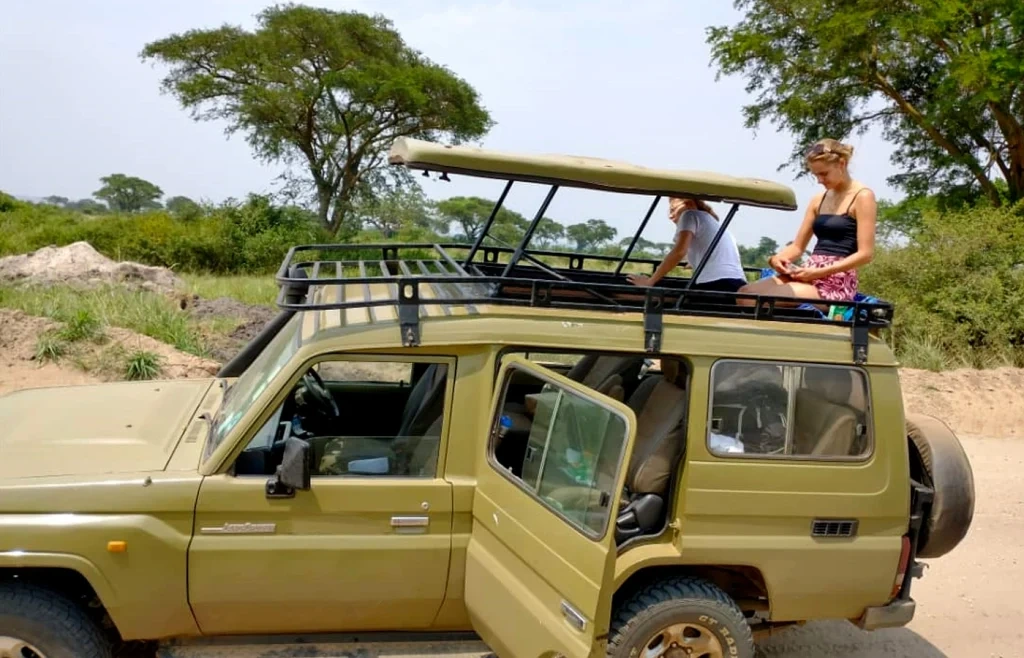
Self drive safari planning checklist.A self drive safari in Uganda and Rwanda involves more moving parts than most visitors anticipate at the outset — permits that must be booked months in advance, vehicle documentation that crosses two countries, equipment that must be in the vehicle before the remote sections begin, and daily preparation habits that accumulate into a well-managed circuit or an unnecessarily stressful one depending on how consistently they are followed. A planning checklist is the tool that converts good intentions into confirmed preparation, and the value of working through it systematically is that it surfaces the gaps — the permit not yet booked, the document not yet requested from the rental company, the equipment item left out of the pack — while there is still time to address them. This complete Uganda Rwanda self drive safari planning checklist covers every phase: the decisions to make before booking anything, the bookings to confirm and in what order, the vehicle collection check, the documents to carry in the vehicle, the equipment to pack, the morning-of-driving preparation, and the park gate routine that every entry requires. Browse our Uganda self drive packages and car hire and self drive options for vehicle and permit planning support across every checklist phase.
Before You Book Anything — The Decisions Checklist
The pre-booking phase requires four decisions to be made before money changes hands. First, confirm the total number of trip days available, including arrival and departure days — this sets the maximum circuit length. Second, identify whether the circuit includes any capacity-limited activities: gorilla trekking at Bwindi, chimpanzee trekking at Kibale Forest, or gorilla trekking at Rwanda’s Volcanoes National Park. These determine the booking sequence — if gorilla permits are needed, they are booked before anything else. Third, establish whether the circuit crosses into Rwanda, which triggers the cross-border documentation requirements and the driving-side change from Uganda’s left-hand traffic to Rwanda’s right-hand traffic. Fourth, identify the most demanding road section in the planned circuit — if it includes Bwindi’s Nkuringo sector, Semliki’s escarpment road, Kidepo’s northern approach, or any driving in the wet season, the vehicle must be a Toyota Land Cruiser Prado from start to finish. Once these four decisions are made, the booking sequence can begin in the correct order.
The Bookings Checklist — What to Confirm and in What Order
Gorilla trekking permits through Uganda Wildlife Authority and Rwanda Development Board are the first bookings, with specific trek dates and sectors confirmed before accommodation or vehicle hire is arranged. The permit date becomes the circuit’s fixed anchor point around which everything else is planned. Once permits are confirmed, vehicle hire should be the second booking — confirm the vehicle type matches the circuit’s most demanding section, the collection and return dates bracket the full circuit with buffer days, the cross-border documentation package is included if Rwanda is on the route, and Third Party Insurance is valid in both countries. Accommodation is the third booking phase, planned backwards from the permit date: the night before the gorilla trek is the first confirmed accommodation booking, and each preceding night is planned backward from that fixed point at driving distances that allow arrival before dark. The final booking phase covers any additional park activities — boat cruises on Uganda’s Kazinga Channel, Murchison’s Nile cruise, walking safaris — that require advance booking through Uganda Wildlife Authority or licensed operators at the relevant park. Our gorilla trekking safaris coordinate permit booking with vehicle hire dates.
The Vehicle Collection Checklist
At the rental company premises, work through the vehicle systematically before departing. Tyres: check all four road tyres for adequate tread and correct inflation, and physically inspect the spare tyre in the boot for full inflation and undamaged condition — a flat or damaged spare is useless on a Bwindi murram section. Tools: confirm the jack, wheel brace, and warning triangle are present and stored accessibly rather than buried under luggage. GPS device: power it on, confirm it has offline Uganda maps loaded and is charged, and verify the route from the collection point to the first night’s accommodation displays correctly. Emergency contact: save the hire company’s 24-hour emergency number to the driver’s phone before leaving the car park, not after a breakdown occurs. Fuel: confirm whether the vehicle is collected full and returned full, and locate the nearest fuel station on the departure route immediately. Cross-border documents: if the circuit includes Rwanda, confirm the temporary import permit, Third Party Insurance for Rwanda, and vehicle logbook are all physically present in the vehicle’s document folder rather than held at the company office for later collection. Browse our self drive fleet for vehicle specifications and what is included in collection.
The Documents Checklist — What Must Be in the Vehicle
The vehicle’s document folder should contain the following before the circuit departs: the vehicle logbook or rental ownership letter in original form; the rental agreement from the hire company; Third Party Insurance certificate valid for Uganda and Rwanda if the circuit is cross-border; the temporary import permit for Rwanda if applicable; the driver’s original home country driving licence; the International Driving Permit if carried; the gorilla trekking permit confirmation documents for Bwindi’s specific sector and date; the chimpanzee trekking permit confirmation if Kibale is on the circuit; and the personal travel insurance documents including the emergency assistance contact number. All documents must be originals — photocopies are not accepted at Uganda’s police checkpoints, border crossings, or park gates. Keep the document folder accessible in the front cabin rather than in the boot luggage, and do not transfer documents to accommodation rooms overnight where they could be misplaced on a morning departure.
The Vehicle Equipment Checklist — What to Pack
The equipment packed in the vehicle before departure covers three categories. Safety equipment: the warning triangle is legally required for roadside breakdowns and must be in the vehicle — confirm its presence at collection; a first aid kit appropriate for remote location use including antiseptic, bandages, and any prescription medications covers the medical gap between a rural Uganda roadside and the nearest clinic. Navigation: the GPS device with offline Uganda and Rwanda maps is the primary navigation tool; a smartphone with an offline maps application such as Maps.me downloaded for both countries provides a backup navigation system that functions without mobile data. Provisions: carry a minimum of two litres of water per person per driving day, a supply of high-energy snacks sufficient for a full day without a commercial stop, and a cooler box for the sections of the circuit covering Queen Elizabeth and Murchison Falls where midday temperatures make warm water and food a poor driving companion. A torch or headlamp for each traveller covers the evening and campsite lighting gap that vehicle lighting does not address.
The Morning-of-Driving Checklist
On every transfer day morning, a brief vehicle and route check before departure manages the most common avoidable problems. Check the fuel level and confirm there is a fuel station on the day’s route within comfortable range of the current level — never begin a murram road section with less than half a tank. Confirm the GPS is charged and the day’s route is loaded. Check the tyre condition visually — a slow puncture that was not visible the evening before may be apparent on a morning walk-around. Confirm the departure time allows arrival at the day’s destination before dark — if the driving estimate is five hours, a 7am departure targets a midday arrival with afternoon time; a 10am departure risks arriving after dark on Uganda’s rural roads. Brief all passengers on the seatbelt requirement for the full journey — Uganda law requires seatbelts for all occupants and police checkpoints verify compliance.
The Park Gate Checklist
Every time the vehicle enters a Uganda national park gate, the same brief routine covers the requirements. Present the vehicle logbook or rental document alongside personal identification at the gate. Pay the current day’s park entry fees for all occupants — fees are charged per person per day and must be paid in the correct currency or by card if the gate accepts it; carry USD cash as a reliable backup at gates where card payment is unreliable. Collect any available park map and ask the gate staff for recent wildlife sighting information on the game circuits — the most valuable two minutes of any game drive day is this gate conversation. Confirm the gate’s closing time for vehicle re-entry — some park gates close at 7pm and vehicles must be inside by this time or remain outside until morning. Browse our best 4×4 car hire deals or contact our team today to plan a self drive circuit with every checklist phase covered from booking through return.
Related posts

Leave a Comment