
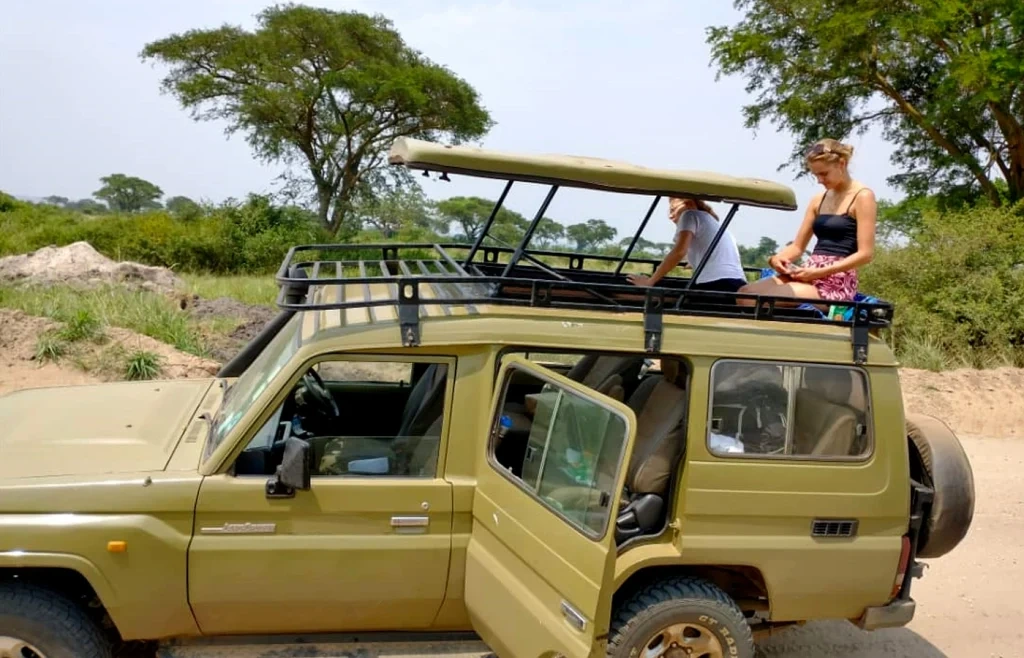
Prado vs Land cruiser V8.When self drive visitors to Uganda start comparing vehicles at the upper end of the 4×4 range, the choice often narrows to two iconic Toyotas — the Land Cruiser Prado and the Land Cruiser V8. Both vehicles carry the Land Cruiser name, both are body-on-frame 4x4s with proven off-road credentials, both are widely used for safari travel across East Africa, and both are capable of handling Uganda’s most demanding roads and game tracks in virtually any season. But they are meaningfully different vehicles in terms of size, engine power, passenger capacity, fuel consumption, ride character, and daily rental cost — and understanding those differences is important for any self drive visitor trying to decide which option is worth the investment for their specific Uganda itinerary. This complete comparison of the Prado versus the Land Cruiser V8 for Uganda safari self drive covers every relevant dimension from off-road performance and interior comfort to running costs, group size suitability, and the specific parks and routes where each vehicle’s strengths are most apparent. Both vehicles are available in our Uganda and Rwanda self drive fleet with full safari preparation as standard.
Understanding the Two Vehicles — What You Are Actually Comparing
The Toyota Land Cruiser Prado — sold in various markets as the Prado or the 4Runner — is a mid-size body-on-frame 4×4 built on Toyota’s J150 platform. It is powered by a 3.0-litre turbodiesel four-cylinder engine in most African safari configurations, producing around 170 horsepower and 410 Newton metres of torque. With a ground clearance of approximately 215 millimetres, a proper low-range four-wheel drive system, locking rear differential, and a five to seven seat interior in a footprint that is substantial but not overwhelmingly large, the Prado is one of the most versatile and most widely used safari 4x4s in East Africa. It is significantly more capable off-road than the RAV4 Safari and significantly more economical than the V8, sitting in a practical middle ground that suits a wide range of Uganda self drive itineraries and budgets.
The Toyota Land Cruiser V8 — typically the 200 Series in its most common Uganda safari configuration — is a full-size luxury 4×4 on Toyota’s J200 platform, powered by a 4.5-litre twin-turbocharged V8 diesel engine producing around 195 to 200 horsepower and 650 Newton metres of torque. It is larger, heavier, more powerful, and more luxuriously appointed than the Prado in every dimension — a vehicle that combines genuine expedition-grade off-road capability with a level of interior comfort, noise insulation, and road-smoothing suspension refinement that makes Uganda’s longest driving days feel genuinely effortless. It is also more expensive to rent, more expensive to fuel, and less nimble on narrow tracks than the Prado — trade-offs that matter differently depending on who is driving, how far, and on what terrain.
Off-Road Capability — A More Nuanced Comparison Than You Might Expect
On paper, the Land Cruiser V8 is the more capable off-road vehicle — its greater engine torque, more sophisticated multi-terrain select system, active traction control, and kinetic dynamic suspension system give it a measurable advantage in extreme off-road situations. In the specific context of Uganda safari self drive, however, the performance gap between the Prado and the V8 on the roads and tracks visitors actually encounter is considerably smaller than the specification difference suggests. On the gravel approach road from Kabale to Bwindi’s Buhoma sector, on the steep switchback road to Nkuringo, on the Delta Track game circuit in Murchison Falls National Park, and on the remote tracks of Kidepo Valley National Park in the dry season — the Prado handles all of these confidently and without drama. The V8’s performance advantage becomes meaningful in situations that push beyond the Prado’s limits: extremely steep and deeply rutted wet-season clay roads after prolonged rain, heavily loaded expedition driving in remote areas, and recovery situations where raw torque makes the difference. For the majority of Uganda self drive visitors who are not driving in extreme wet season conditions on the most challenging approach roads, the Prado is more than capable enough, and the V8’s additional off-road capability represents a margin of safety rather than a practical necessity. Our self drive planning guide covers vehicle selection for each Uganda park and route in detail.
Interior Space, Comfort, and Long-Distance Driving
The Land Cruiser V8 has a decisive and meaningful advantage over the Prado in interior space, ride quality, and long-distance driving comfort — and for visitors facing Uganda’s longer self drive stages, this advantage is worth taking seriously. The V8’s larger body accommodates five to seven passengers with generous legroom in all rows, and its greater boot space swallows full camping kits, photographic equipment, and week-long luggage without the Tetris-like packing discipline that the Prado sometimes requires on a fully loaded extended road trip. On Uganda’s longest self drive days — the nine to eleven hour Entebbe to Bwindi drive, the full-day Kampala to Kidepo journey, or an extended cross-border circuit combining Uganda and Rwanda — the V8’s superior noise insulation, air conditioning performance, and suspension refinement translate to noticeably less driver and passenger fatigue at journey’s end. The Prado is a comfortable vehicle by any normal standard, but the V8 operates at a higher tier of long-distance comfort that families, older travellers, and visitors prioritising in-vehicle experience over budget will find worth the additional cost. Both vehicles are available with pop-up roof hatches for game viewing in our safari configurations, and both can be fitted with rooftop tents for camping-style self drive safaris.
Fuel Consumption and Running Costs
Fuel consumption is where the Land Cruiser V8 pays a meaningful penalty compared to the Prado, and on Uganda’s longer self drive circuits this difference adds up to a significant cost. The V8’s 4.5-litre twin-turbo diesel typically consumes 14 to 18 litres per 100 kilometres on Uganda’s roads — a mix of highway, highland, and game track driving — compared to the Prado’s 12 to 15 litres per 100 kilometres on similar terrain. On a ten-day Uganda circuit covering approximately 2,000 kilometres, this consumption gap can amount to 40 to 60 additional litres of diesel, or $50 to $75 USD at current Uganda fuel prices. Added to the V8’s higher daily rental rate, the total cost differential between a Prado and a V8 rental for a ten-day Uganda safari is meaningful — typically $150 to $300 USD more for the V8 when fuel and daily rate differences are combined. For visitors where budget is a consideration and off-road conditions do not specifically demand the V8, the Prado represents better overall value. For visitors where comfort, space, and the confidence of the world’s most capable production safari vehicle matter more than cost optimisation, the V8 is worth every additional dollar. View our current best 4×4 car hire deals for Uganda for comparative daily rates on both vehicles.
Game Viewing and Safari Configuration
For game drives in Uganda’s national parks, both the Prado and the Land Cruiser V8 deliver outstanding performance as safari vehicles when fitted with pop-up roof hatches. The V8’s additional height gives standing passengers a marginally elevated sight line across open savannah in parks like Queen Elizabeth National Park and Murchison Falls — a small but perceptible advantage for tall-grass game viewing and long-lens photography. On narrower game tracks where the width of the vehicle matters for passing through tight vegetation sections, the Prado’s slightly smaller footprint can be an advantage — but this is a minor consideration on Uganda’s generally well-maintained game track networks. For camping-configured vehicles, the V8’s more robust roof rack system and higher payload capacity make it the preferred platform for a fully equipped rooftop tent setup with a complete camping kitchen — the additional weight of a full camping kit is handled comfortably where the Prado occasionally operates closer to its roof load limits on heavily loaded trips.
Which Vehicle Should You Choose — Prado or Land Cruiser V8?
The Prado is the right choice for most Uganda self drive visitors: it handles every road and track Uganda can present in dry season conditions, manages wet-season challenges on all but the most extreme approach roads with correct driving technique, costs meaningfully less to rent and fuel than the V8, and comfortably accommodates up to five adults with luggage on any Uganda circuit. The Land Cruiser V8 earns its premium for specific situations — family groups of five or more adults needing genuine space and comfort across multiple long driving days, visitors travelling in the heart of the March to May wet season on the most demanding Bwindi approach roads, or travellers who simply want Uganda’s finest safari vehicle for an extended cross-border Rwanda Uganda road trip and value comfort and capability above all other considerations. Our 7-day best of Uganda tour and 10-day Rwanda Uganda safari are available in both Prado and V8 configurations — contact our team today for a personalised vehicle recommendation matched to your group size, travel dates, and Uganda itinerary.
Related posts


Leave a Comment