
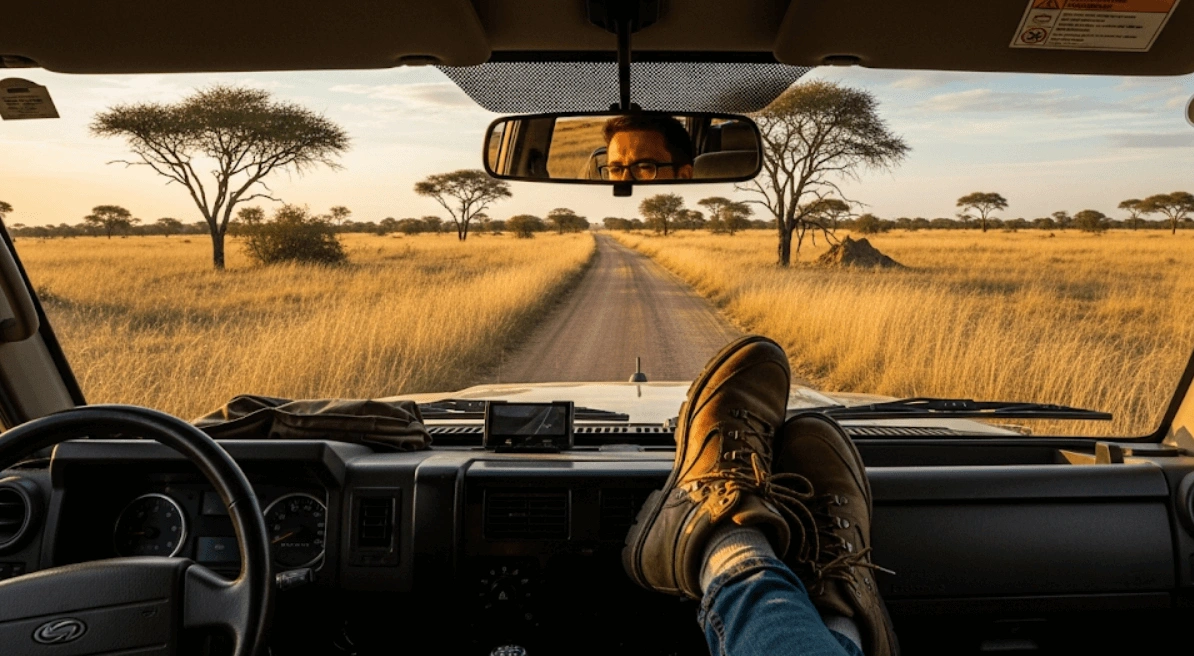
Everything you need to know before self driving Uganda.A Uganda self drive safari is one of the most rewarding road trip experiences in Africa — a circuit through highland landscapes, equatorial forests, and open savannah that places the visitor in direct contact with mountain gorillas, chimpanzees, tree-climbing lions, and the Nile at its most dramatic, on a route where the driving itself is part of the experience rather than transit between destinations. First-time Uganda self drive visitors who know what to expect arrive confident and well-prepared; those who do not can find the first day’s driving disorienting, the permit situation confusing, or the vehicle under-specified for roads that are demanding in ways that no amount of general African safari experience fully prepares for. This guide covers everything a visitor needs to know before the circuit begins: the driving rules that are most important, the vehicle reality, the permit timing that most visitors underestimate, what the main parks deliver, the best season to visit, what a complete rental package should include, how long the circuit needs, and the health and document preparation that the circuit requires. Browse our Uganda self drive packages and car hire and self drive options alongside this guide for vehicle and itinerary planning support.
Uganda Drives on the Left — And Has Its Own Road Habits
Uganda uses left-hand traffic — the same side as the United Kingdom, Australia, Kenya, and Tanzania — which is comfortable and intuitive for visitors from those countries and requires conscious adjustment for visitors from mainland Europe, North America, and Rwanda. The left-side rule applies on all Uganda roads: keep left, overtake on the right, and at roundabouts give way to traffic from the right. More important than the side of the road, however, is Uganda’s specific road environment: speed bumps are present on almost every road passing through a town or settlement, are frequently unmarked, and arrive without sufficient warning distance at normal driving speed unless the driver has already reduced speed on approach to any built-up area. The speed limit discipline is 50 kilometres per hour in urban areas and 80 kilometres per hour on open roads, and police checkpoints enforce these limits across the circuit. Night driving on Uganda’s rural roads is strongly advised against — pedestrians, livestock, and unmarked speed bumps in darkness constitute a risk level that no driving priority justifies; plan every transfer day to arrive before dark.
The Vehicle Reality — Why 4×4 Means Something Specific Here
Uganda’s safari circuit is not a tarmac road network with occasional unpaved sections — it is a predominantly varied network where the approach roads to the most rewarding destinations are murram tracks that require genuine four-wheel drive capability, meaningful ground clearance, and the low-range engagement that a vehicle built for urban all-wheel drive cannot provide. The Toyota Land Cruiser Prado from our self drive fleet is the right vehicle for any circuit that includes Bwindi Impenetrable National Park, wet-season travel, Semliki National Park, or any of Uganda’s more remote northern destinations. The Toyota RAV4 Safari handles the more accessible parks — Queen Elizabeth National Park via the Kasese tarmac, Kibale Forest National Park on the Fort Portal approach road, and Lake Mburo in dry season — but should not be used for Bwindi’s sector approaches in any condition. The practical rule: identify the most demanding road on your planned circuit and choose the vehicle that handles it comfortably, then use that vehicle for the entire circuit rather than attempting a vehicle upgrade at the midpoint.
Gorilla Permits — Book These Before Everything Else
The gorilla trekking permit for Bwindi Impenetrable National Park is Uganda’s most capacity-limited safari experience — each habituated gorilla family receives a maximum of eight visitors per day, permits sell out months in advance for peak season, and the permit date once confirmed becomes the fixed anchor around which the entire circuit must be structured. The permit costs USD 700 per person, is booked through Uganda Wildlife Authority, and applies to a specific sector and a specific date — changing sectors or dates after booking is subject to availability and administrative process. First-time Uganda visitors consistently underestimate how far in advance gorilla trekking permits need to be secured, and the most common planning failure is attempting to book a July or August permit in April and discovering nothing is available. Book permits before accommodation, before vehicle hire, and before any other circuit element. Once the trek date and sector are confirmed, everything else — vehicle collection, accommodation sequence, preceding park days — is planned to arrive at the sector gate area by the night before the permit date. Our gorilla trekking safaris page covers permit coordination alongside vehicle hire.
Understanding the Main Parks — What Each One Delivers
Uganda’s main self drive national parks each have a distinct character and a distinct primary experience. Bwindi Impenetrable National Park is visited primarily for gorilla trekking — the habituated family encounter is the experience, with the forest itself providing the dramatic setting. Queen Elizabeth National Park is Uganda’s most diverse savannah park, with the Kasenyi Plains lion and elephant game drives, the Kazinga Channel boat cruise combining hippos and water birds, and the Ishasha sector’s tree-climbing lions in the south. Kibale Forest National Park is Uganda’s chimpanzee trekking capital — the Kanyanchu community’s habituation means chimp encounters at close range are reliable — with the Bigodi Wetland Sanctuary adding a walking complement to the forest. Murchison Falls National Park combines the Nile-force spectacle of the falls themselves, the northern bank Buligi game circuit for elephants, giraffes, and lions, and the river cruise that approaches the base of the falls from below. Each park warrants a minimum of two days for more than a single activity experience; a circuit covering all four requires at least ten days.
The Best Time to Visit Uganda
Uganda’s two dry seasons — June to September and December to February — are the most reliable times for self drive visiting across all parks and road types. Game tracks are compacted and passable in any appropriate vehicle, accommodation is fully operational, and park access roads present their most manageable conditions. June to September is Uganda’s longest and most popular dry season and the period when gorilla trekking permit demand peaks. The wet seasons — March to May and October to November — bring softer murram roads, challenging approach conditions at Bwindi and on remote circuits, but retain all the wildlife and all the park experiences: gorillas trek year-round regardless of rainfall, and the wet season visitor benefits from smaller crowds, lower accommodation pricing, and a landscape of vivid green intensity that the dry season’s brown grass does not match. May specifically is an underrated window — the rains diminish in the final two weeks, road conditions improve, and the pricing advantages of the wet season persist into what are increasingly dry-season driving conditions.
What a Complete Rental Package Includes
A properly assembled Uganda self drive rental package includes the vehicle itself, a GPS device preloaded with offline Uganda maps, a full-size spare tyre, a jack and wheel brace, a warning triangle, Third Party Insurance for Uganda, and a 24-hour emergency contact number. Cross-border documentation — the temporary import permit and Rwanda Third Party Insurance — is added for circuits that include Rwanda. The GPS device is not an optional extra; Uganda’s approach roads to remote parks are not reliably signed and mobile data for navigation is absent on several critical sections of the circuit. The full-size spare tyre rather than a space-saver is essential — a space-saver is limited to 80 kilometres at reduced speed and is useless on Bwindi’s 85-kilometre murram approach road. Browse our best 4×4 car hire deals for what each package includes at the headline rate.
How Long to Allow, and What to Prepare
A Uganda circuit that covers two national parks and includes gorilla trekking requires a minimum of seven days; three or four parks warrant ten to fourteen days. Allow more time rather than less — Uganda’s road distances between parks are longer than they appear on a map, and a circuit with more than one long transfer day in a row becomes exhausting rather than enjoyable. Health preparation requires beginning anti-malarial medication before departure — consult a travel clinic at least six weeks out. Documents required in the vehicle include the driver’s original licence, the vehicle logbook, insurance certificate, and gorilla permit confirmation. Fuel is diesel for all Toyota 4×4 rental vehicles and is available in Uganda’s main towns; no fuel is available inside any Uganda national park. Fill up completely before entering any park gate and again at every major town on the circuit. Our 7-day Uganda tour provides an itinerary framework for the most popular circuit length, and our team is available to work through any pre-departure question. Contact our team today to start planning with the right vehicle, the right permit timing, and the right circuit for your first Uganda self drive safari.
Related posts

Leave a Comment