
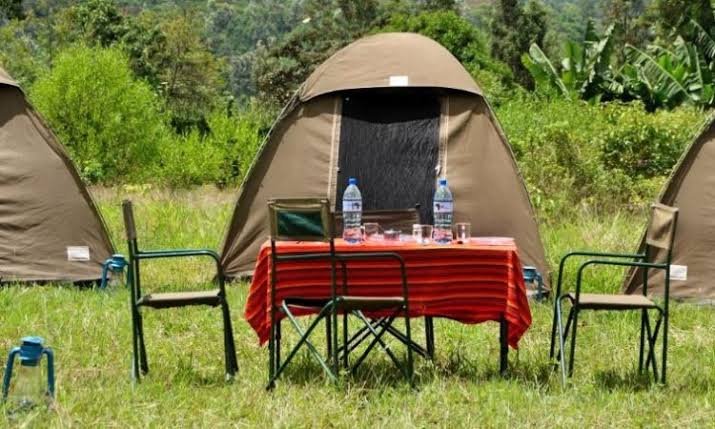
Camping equipment for safari.Packing camping equipment for a Uganda self drive safari requires a different approach from packing for a European or North American camping trip, because Uganda’s national parks present conditions that vary more dramatically from site to site than most camping destinations on other continents. The valley floor of Murchison Falls National Park reaches 35 degrees Celsius in the afternoon with high humidity and a malaria-carrying mosquito population that becomes active at dusk. The highlands of Bwindi Impenetrable National Park can drop to 10 degrees Celsius at night even in the dry season, with morning mist and damp forest air that soaks into sleeping systems and damp gear slowly across multiple nights. Kidepo Valley National Park in Uganda’s remote northeast alternates between fierce dry season heat and sudden afternoon electrical storms. A Uganda camping circuit that covers three or four parks can require the visitor to pack for the full range of these conditions within a single kit, and the equipment choices that handle Murchison comfortably are not necessarily the ones that handle Bwindi’s highland nights. This guide covers every equipment category a Uganda self drive camper needs, the Uganda-specific considerations that make each category’s choices important, what your rental vehicle provides and what remains your responsibility, and the practical approach to keeping camping kit manageable in a 4×4 with limited cargo space. Browse our car hire and self drive options and Uganda self drive packages for vehicle and itinerary planning.
Shelter — Tent Options for Uganda’s Conditions
The tent choice for a Uganda safari depends on whether the circuit uses a rooftop tent mounted on the vehicle or a freestanding ground tent erected at each campsite. A rooftop tent — either pre-fitted on the rental vehicle or brought as a separate unit — provides the elevation above ground-level wildlife activity that Uganda’s Nile-bank and channel-shore campsites specifically reward, and eliminates the tent pitching and striking process at the end and start of each driving day. For ground tent camping, a two-person three-season tent with a fully waterproof flysheet and a sealed groundsheet is the appropriate specification for Uganda — afternoon and overnight rain can arrive without warning in any month, and a tent that leaks in heavy rain in a Uganda national park campsite creates misery that no wildlife encounter compensates for. Double-wall construction — inner tent plus separate flysheet with an airspace between them — provides the ventilation that prevents condensation from building inside the tent in Murchison’s humid heat, and the closed mesh inner keeps Uganda’s mosquitoes out of the sleeping space even when the flysheet is vented for air circulation. A freestanding tent is preferable to a peg-dependent design, as some Uganda campsite surfaces are rocky or compacted and conventional tent pegs may not hold reliably.
Sleeping System — Managing Uganda’s Temperature Range
The sleeping system for a Uganda safari circuit needs to handle a temperature range that most single sleeping bags cannot cover comfortably at both extremes. A sleeping bag rated to 5 degrees Celsius provides the warmth needed for Bwindi’s cold highland nights and Kidepo’s pre-dawn temperatures while being uncomfortably hot at Murchison’s valley floor temperatures in the dry season — the practical solution is a lightweight liner used alone in the hot valley parks and a sleeping bag for the highland forest parks, or a sleeping bag with a zip design that allows full ventilation in hot conditions. A self-inflating sleeping mat is essential for ground tent campers — the insulation it provides between the sleeper and Uganda’s damp ground at highland campsite is as important as the cushioning, and the mat’s warmth-from-below contribution is significant at Bwindi and Kidepo night temperatures. For rooftop tent campers, the RTT’s integrated foam mattress typically provides adequate cushioning, but a thin liner under the sleeping bag adds warmth and hygiene benefit across multi-night circuits.
Camp Kitchen — Cooking Independently in the Parks
A camp kitchen kit for Uganda self drive camping covers the full cooking and eating chain from food preparation through washing up, and the most important single item is a reliable camp stove with sufficient gas supply for the circuit. Canister gas stoves are the most practical option for Uganda camping — lightweight, reliable, and useable on the UWA bush campsites where open fire restrictions apply in dry conditions. Gas canisters are available in Kampala and Entebbe from outdoor and camping suppliers before the circuit begins, and carrying two to three canisters for a seven-day circuit provides adequate cooking fuel with reserve. A two-piece cookset — one medium pot and one pan — covers the full range of camp cooking without excessive weight or pack volume. Plates, mugs, and a cutlery set for the number of campers, a chopping board and knife, and a small washing-up basin with biodegradable soap complete the kitchen kit. A hard-sided cooler box is essential for carrying perishable food across Uganda’s heat — dairy, meat, and fresh produce cannot survive a Uganda driving day without cooling — and ice is available at fuel stations and supermarkets in major towns throughout the circuit. Water carrying capacity matters particularly on Kidepo and Semliki circuits where the distance between reliable water sources is significant — a 20-litre water container in addition to the cooler box provides the reserve that bush campsites without piped water require.
Lighting and Power
A headtorch is the single most important lighting item for Uganda safari camping, and every member of the camping party should carry one with spare batteries rather than sharing a single light between two people. Night ablution trips from the tent to the campsite facilities — in environments where hippos move through camp, where hyenas investigate food smells, and where the paths between facilities and camping pitches are unlit — require a reliable headtorch that leaves both hands free for gate latches, door handles, and necessary awareness of the surrounding area. A solar-charged camp lantern provides ambient light for the cooking and eating area in the evening without the battery drain of a headtorch used continuously throughout dinner. A portable power bank with sufficient capacity to recharge two phones across multiple days without access to mains power covers the navigation, photography, and communication needs of a multi-day bush campsite sequence. Most self drive campers also carry a 12V car charger that recharges devices from the vehicle battery while driving, effectively using the daily driving time as a charging window for all devices.
Clothing for Uganda’s Conditions
Clothing for a Uganda camping safari must address the full spectrum from Murchison’s 35-degree heat through Bwindi’s 10-degree highland nights while also providing protection from Uganda’s insect population, the sun at altitude, and the rain that arrives without notice in any season. Long-sleeved lightweight shirts in neutral colours — khaki, green, grey — provide sun and insect protection in the valley floor parks without the heat retention of heavier fabrics, and these same shirts layered under a fleece or softshell jacket cover Bwindi’s cool forest evenings. A waterproof jacket with a hood is the most important single clothing item on a Uganda camping circuit — one that packs small and deploys quickly covers both the afternoon storm at Kidepo and the persistent morning drizzle at Bwindi. Closed walking boots are essential for the gorilla trekking hike and for navigating wet campsite paths at night, and camp sandals or flip-flops provide foot relief during the driving and eating hours when boots are unnecessary.
Health and Wildlife Safety Essentials
Antimalarial medication prescribed before travel is not optional for Uganda camping — malaria is present throughout Uganda’s national parks and is particularly intense at the valley floor camps of Murchison and Queen Elizabeth where mosquito activity after dark is high. DEET-based insect repellent applied to exposed skin from dusk onward and long-sleeved clothing at the camping hours add physical barriers to the antimalarial medication’s pharmaceutical protection. A comprehensive first aid kit covering wound cleaning, blister treatment, rehydration salts, and pain relief covers the most common camping health needs, and a supply of water purification tablets provides backup for remote sites where water source quality is uncertain. Food storage discipline at Uganda campsites is both a personal safety measure and a campsite etiquette requirement — all food should be stored in the vehicle at night, cooking smells should be minimised through closed containers, and nothing edible should remain in the tent or near the sleeping area. Our self drive fleet vehicles have lockable interior storage that provides secure overnight food storage at every campsite on the circuit. Browse our best 4×4 car hire deals and car hire options, or contact our team today for a complete Uganda camping equipment advisory matched to your specific circuit and the parks on your itinerary.
Related posts

Leave a Comment