
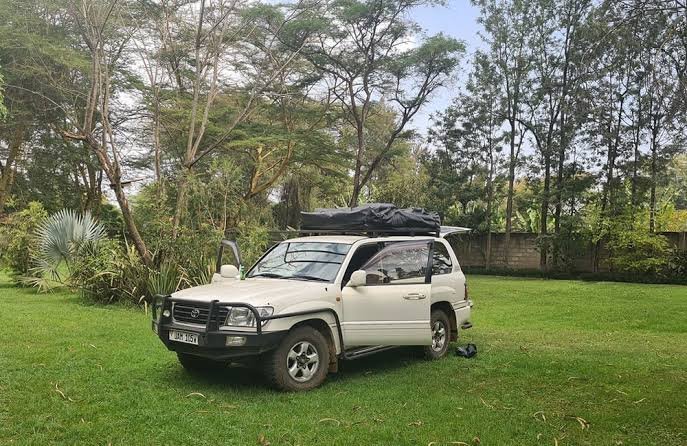
What to know before renting a car in Uganda.Renting a car in Uganda for a self drive safari is a straightforward process when you understand what the rental transaction involves and what to look for in the agreement before signing. The surprises that create friction for Uganda car rental visitors — discovering that the GPS is not included in the headline rate, that the spare tyre is a space-saver rather than a full-size replacement, that cross-border documentation is a separate charge, or that the insurance level provides less coverage than assumed — are almost always avoidable surprises that a pre-rental conversation and a careful reading of the rental agreement would have surfaced. This guide covers every element of the Uganda car rental process that a visitor should understand before signing: driving licence requirements, minimum age, vehicle types, what a complete rental package should include, how insurance works in Uganda’s rental context, fuel policy and deposits, cross-border permissions, and the vehicle collection check that protects both the visitor and the hire company from disputes at return. Browse our car hire and self drive options and best 4×4 car hire deals for transparent Uganda rental pricing.
Driving Licence Requirements
Uganda accepts a valid driving licence issued in any country for visitors renting and driving a vehicle for tourism purposes — you do not need a Ugandan driving licence to legally drive a rental car in Uganda as a foreign visitor. Your home country licence should be an original document rather than a photocopy; Uganda’s police checkpoints verify the physical document and do not accept photocopied or digital versions. An International Driving Permit — the standardised multilingual document issued alongside your home country licence by your country’s motoring authority — is strongly recommended as a supplement, particularly for visitors whose home licence is not in English or does not carry a clear photograph. The IDP provides a translation that Uganda’s police and hire company staff can read without ambiguity and eliminates the uncertainty that arises when a licence is presented in a language or script that is not immediately legible to a checkpoint officer. Carry both the original home country licence and the IDP together in the vehicle’s document folder throughout the circuit; present both when asked at checkpoints rather than only one.
Minimum Age Requirements
Uganda’s self drive rental companies typically apply a minimum driver age of 23 to 25 years for 4×4 vehicles — the Toyota RAV4 Safari, Toyota Land Cruiser Prado, and Toyota Land Cruiser V8. The exact minimum age varies by company and by vehicle type, with some operators applying a higher minimum age for the larger Prado and V8 than for the RAV4. Visitors between 23 and 25 should confirm their eligibility for the specific vehicle type before booking rather than assuming that possession of a valid licence is sufficient. A young driver surcharge applies at some Uganda rental companies for drivers under 25, functioning similarly to the young driver fees applied by car rental companies in Europe and North America. Visitors significantly over the minimum age face no upper age restriction in Uganda’s self drive rental context, though some companies request a medical fitness declaration for drivers over 70. Confirm the minimum age policy of your chosen hire company at the enquiry stage rather than at vehicle collection.
What Vehicle Types Are Available
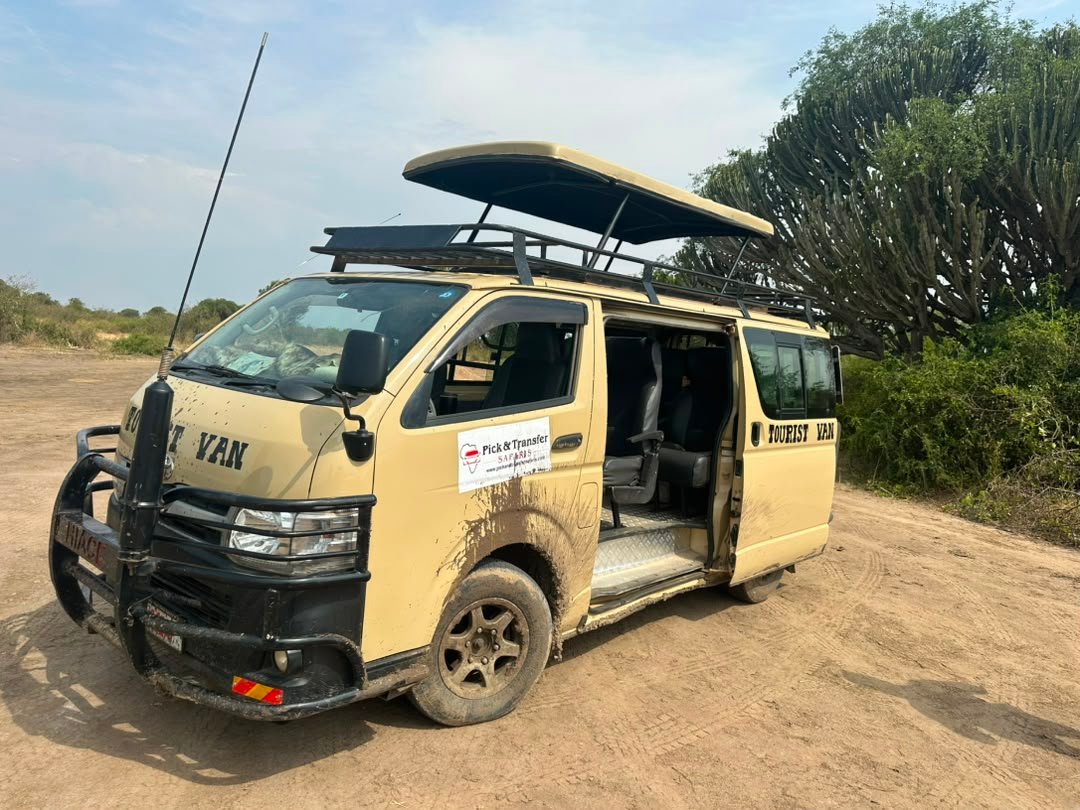
Uganda’s self drive rental fleet is built around three Toyota 4×4 vehicle types that cover the range of circuit demands the country’s roads present. The Toyota RAV4 Safari is the most accessible and most affordable option, handling Uganda’s main tarmac highways and the more accessible park approaches in dry season conditions. The Toyota Land Cruiser Prado is Uganda’s benchmark safari rental vehicle, appropriate for any circuit including Bwindi, wet-season travel, and remote park access. The Toyota Land Cruiser V8 — the 200-series Land Cruiser — is the highest-capability option, suitable for the most demanding circuits and larger groups. For self drive visitors, these three vehicle types cover every Uganda circuit; guided tour visitors additionally have access to safari vans with pop-up roofs for group game drives. Browse our self drive fleet for current vehicle specifications and availability.
What a Complete Uganda Rental Should Include
A properly assembled Uganda self drive rental package includes the vehicle, a GPS device preloaded with offline Uganda maps, a full-size spare tyre, a jack and wheel brace, a warning triangle, Third Party Insurance for Uganda, and a 24-hour emergency contact number. Each of these elements matters independently: the GPS device handles navigation in areas where mobile data for phone map applications is unavailable; the full-size spare tyre — not a space-saver — is essential on Bwindi’s 85-kilometre murram approach where a space-saver’s 80-kilometre speed-limited range provides no real recovery; the warning triangle is legally required for roadside breakdown situations; and the 24-hour emergency contact connects the driver to support in the remote areas where a breakdown creates a problem that cannot wait for business hours. Before booking, confirm that each of these items is included at the headline daily rate rather than charged as an add-on. A quote that excludes any of these items from the base rate should be evaluated on its total cost with all inclusions before comparison with a higher headline rate that includes everything.
Understanding the Insurance
Uganda’s mandatory Third Party Insurance covers liability to third parties — other road users, pedestrians, and property — in the event of an accident that is the rental vehicle driver’s fault. This mandatory insurance is legally required for every vehicle on Uganda’s roads and should be included in the rental package at no additional charge; confirm its inclusion in writing before signing. Third Party Insurance does not cover damage to the rental vehicle itself — that protection falls under a separate Collision Damage Waiver or CDW, which rental companies offer as an additional daily charge and which reduces the driver’s liability for vehicle damage in the event of an accident or road incident. Whether to take CDW is a risk management decision: the CDW reduces the financial exposure of a collision or off-road incident on a Uganda murram road significantly, and its daily cost is modest relative to the potential repair bill for a Prado that has bottomed out on a hidden rock. Read the CDW terms carefully — most policies carry an excess even with CDW, and conditions about off-road use, night driving, and single-vehicle incidents vary between companies.
Fuel Policy and Security Deposit
Uganda’s self drive rental vehicles run on diesel — the Toyota RAV4 Safari, Land Cruiser Prado, and Land Cruiser V8 are all diesel-engined, and petrol stations in Uganda sell both diesel and petrol clearly labelled. Confirm this before fuelling; filling a diesel engine with petrol causes significant mechanical damage and is not covered by standard rental insurance. The standard fuel policy for Uganda self drive rentals is full-to-full: the vehicle is collected with a full tank and must be returned with a full tank, with any shortfall charged at the company’s fuel rate. Fill the tank completely at the last fuel station before the return rather than estimating the remaining fuel and returning partially full. A security deposit — typically held as a pre-authorisation on a credit card rather than a cash charge — is standard practice and covers the hire company against non-return, damage excess, and fuel shortfall. Confirm the deposit amount and release timeline before signing, as release timelines of three to ten business days are common after vehicle return.
Cross-Border Permissions and the Rental Agreement
Visitors planning to drive the rental vehicle into Rwanda require explicit cross-border permission from the hire company — driving across the Katuna–Gatuna or Cyanika border crossing without the hire company’s written permission and the associated documentation package constitutes a breach of the rental agreement and invalidates the vehicle’s insurance. The cross-border documentation includes the temporary import permit for Rwanda, Third Party Insurance valid in Rwanda, and an official letter from the hire company authorising the vehicle’s movement across the border. This documentation takes preparation time and should be requested and confirmed at the time of booking rather than the day before departure. The rental agreement itself should be read carefully for clauses covering: permitted geographic operating area, off-road use restrictions, night driving requirements, driver restriction to named drivers, and the specific process for reporting damage or incidents. Questions about any clause should be resolved before signing, not after. Contact our team today to discuss cross-border documentation alongside your Uganda self drive booking, or browse our Uganda self drive packages for complete circuit options with transparent rental terms.
Related posts


Leave a Comment