
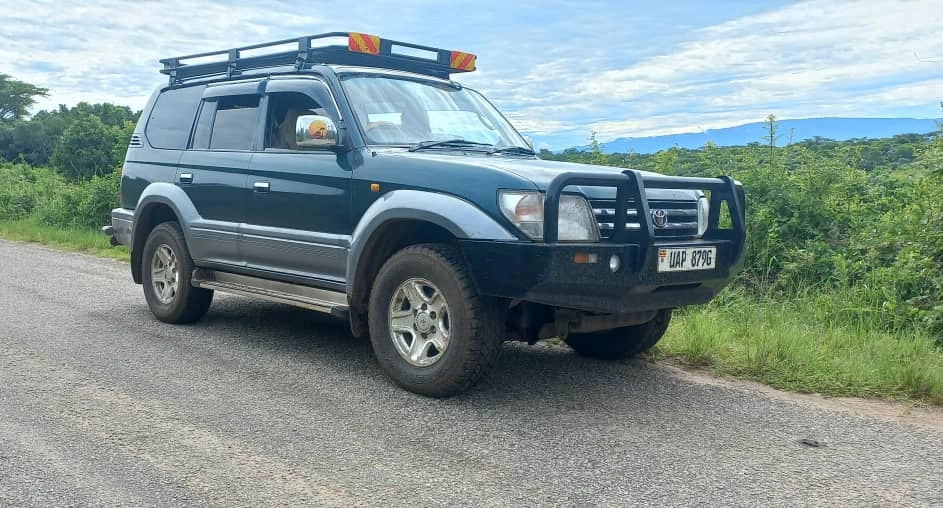
Rav4 vs Prado for Uganda safaris.The RAV4 Safari versus Land Cruiser Prado debate is the most frequent vehicle conversation our team has with Uganda self drive visitors, and for good reason — the two vehicles sit at the most important price and capability boundary in Uganda safari car hire, and choosing the wrong one for your specific itinerary is either an unnecessary expense or a genuine operational problem. The Prado costs meaningfully more per day to hire and more per hundred kilometres to fuel. The RAV4 costs meaningfully less but has real limitations on Uganda’s most demanding roads in wet conditions. Between those two facts lies a decision that is not difficult when mapped against your specific parks, your travel season, and your group size — but that is easy to get wrong when approached as a generic comparison rather than a Uganda-specific one. This guide cuts through the vehicle specifications and focuses entirely on the practical scenarios Uganda safari visitors actually face, matching the RAV4 Safari and the Prado to the roads and conditions where each genuinely excels. Both vehicles are available in our Uganda self drive fleet with full safari preparation as standard.
The Fundamental Difference — What It Means on Uganda’s Roads
The RAV4 Safari and the Land Cruiser Prado are different categories of vehicle at a fundamental engineering level, and this difference matters on specific Uganda roads even if it is invisible on others. The RAV4 Safari uses a unibody construction — the same structural approach as a standard passenger car — modified with raised suspension, all-terrain tyres, and a low-range four-wheel drive system. The Prado uses a body-on-frame ladder chassis — the same structural approach as a full truck — which gives it substantially greater torsional rigidity, higher ground clearance at approximately 215 millimetres versus the RAV4’s 185 to 200 millimetres, a more capable four-wheel drive system with a locking rear differential, and significantly more torque from its 3.0-litre turbodiesel. On Uganda’s smooth main highways and well-maintained park game tracks in dry conditions, none of these differences matter — both vehicles feel comfortable, capable, and entirely fit for purpose. On the clay switchback road descending to Bwindi’s Nkuringo sector after a week of rain, on the Delta Track in Murchison Falls in the wet season, or on the deeply rutted laterite road north of Kitgum toward Kidepo Valley, the differences matter considerably.
The RAV4 Safari’s Uganda Sweet Spot
The RAV4 Safari performs at its best in a clearly defined Uganda safari context: dry season travel, from June to September or December to February, on an itinerary centred on Queen Elizabeth National Park and Murchison Falls National Park with a gorilla permit for Bwindi’s Buhoma sector if Bwindi is included. In this context, the RAV4 handles every road comfortably — the Kasenyi Plains game circuit in Queen Elizabeth, the northern game tracks of Murchison, the Nile delta approach in dry conditions, and the Kabale-to-Butogota gravel road to Buhoma gate when it is firm and dry. Its fuel economy advantage of approximately 9 to 11 litres per 100 kilometres against the Prado’s 12 to 15 litres saves a meaningful amount across a ten-day Uganda circuit covering 1,800 to 2,000 kilometres — a real financial consideration for budget-conscious self drive visitors. Its lower daily hire rate adds to the cost advantage. For a couple or small group on a dry-season Uganda circuit that stays within these parameters, the RAV4 Safari is not a compromise — it is the right vehicle for the job, and the Prado’s additional capability represents cost spent on margin that the itinerary does not need.
The Prado’s Uganda Sweet Spot
The Land Cruiser Prado earns its premium in a specific and important set of Uganda safari scenarios. Any travel in the wet season months of March to May or October to November on roads that include even a moderate amount of unpaved surface puts the Prado in its element and the RAV4 at genuine risk of difficulty. Any gorilla permit for Bwindi’s Nkuringo, Rushaga, or Ruhija sectors — where the approach roads are steeper, more remote, and more demanding than Buhoma in all conditions — makes the Prado the appropriate minimum specification regardless of season. Any itinerary that includes Kidepo Valley National Park in the northeast requires the Prado’s torque, range, and chassis robustness on the long remote drive north of Kitgum. Any group of four or more adults with full luggage on a circuit of seven days or more will find the Prado’s additional interior space and boot capacity practically important rather than a luxury. Our self drive planning guide maps vehicle recommendations against specific Bwindi sectors and travel seasons in detail.
Season Is the Single Most Important Variable
If there is one variable in the RAV4 versus Prado decision for Uganda safaris that overrides all others, it is the travel season. Uganda’s dry seasons of June to September and December to February are when the RAV4 Safari is fully capable across the main circuit. Uganda’s wet seasons of March to May and October to November are when the Prado’s advantage on unpaved approach roads becomes practically significant rather than theoretical. The wet season roads that cause most self drive difficulties are not the main highways — those remain good year-round — but the gravel and clay approach roads to Bwindi and the softer delta sections of Murchison’s game circuits after sustained rain. A RAV4 Safari on the Nkuringo approach in April after a week of heavy rain is a stressful vehicle in a situation it was not designed for. A Prado in the same conditions is working within its capabilities and moving confidently. Before committing to the RAV4, check your exact travel dates against Uganda’s seasonal calendar and your specific Bwindi sector gate — if either is a wet season date or a demanding sector, upgrade to the Prado.
The Cost Difference — Is the Prado Worth It?
The daily hire rate difference between the RAV4 Safari and the Land Cruiser Prado, combined with the fuel consumption gap over a 7 to 10-day Uganda circuit, produces a total cost difference that is worth calculating specifically for your trip before making a decision. On a 7-day Uganda circuit covering approximately 1,200 kilometres, the RAV4’s fuel cost saving over the Prado is approximately 30 to 40 litres of diesel — roughly $35 to $50 USD at current Uganda fuel prices. The daily hire rate difference adds further to the RAV4’s cost advantage across the rental period. For visitors where budget is a genuine consideration and the itinerary falls within the RAV4’s capability range, this saving is real and worth taking. For visitors where the itinerary or season places the RAV4 outside its comfort zone, the additional cost of the Prado is not optional — it is the correct expenditure for the roads involved. View our current comparative rates on our best 4×4 car hire deals page to calculate the actual cost difference for your specific hire period.
The Practical Decision in Four Questions
The RAV4 versus Prado decision for your Uganda safari can be resolved by answering four specific questions honestly. First: what are your exact travel dates and do any of them fall in March to May or October to November? If yes, choose the Prado. Second: if Bwindi is on your itinerary, which sector is your gorilla permit for? If Nkuringo, Rushaga, or Ruhija, choose the Prado regardless of season. Third: does your itinerary include Kidepo Valley National Park? If yes, choose the Prado without question. Fourth: how many adults are in your group and how much luggage are you carrying? If four adults with full luggage for ten days, choose the Prado for the space alone. If all four answers point away from the Prado — dry season dates, Buhoma sector or no Bwindi, no Kidepo, two to three adults with modest luggage — the RAV4 Safari is the right vehicle and the right value for your Uganda safari circuit. Browse our full safari packages and car hire options, or contact our team today for a vehicle recommendation specific to your exact dates, permits, and itinerary.
Related posts

Leave a Comment