
Left hand driving in Uganda explained.One of the first things every self drive visitor to Uganda needs to understand before collecting their rental vehicle is that Uganda drives on the left. This single fact shapes every aspect of the driving experience — the position of the steering wheel, the flow of traffic at roundabouts, the instinctive direction you look when pulling out of a junction, and the mental recalibration required when coming from a right-hand traffic country. For visitors arriving from the United States, continental Europe, Rwanda, or much of the rest of the world where traffic flows on the right, left-hand driving in Uganda can feel unfamiliar and demanding in the first hours behind the wheel. For visitors from the United Kingdom, Kenya, Tanzania, South Africa, Australia, or India, it will feel immediately natural. Either way, understanding exactly what left-hand driving means in practice — and the specific situations where it catches people out most often — is the single most important preparation you can make before embarking on a Uganda self drive safari. This guide explains left-hand driving in Uganda completely, practically, and with the specific situations that matter most for self drive visitors to Uganda’s national parks.
What Left-Hand Driving Actually Means in Uganda
Left-hand driving means that traffic in Uganda flows on the left side of the road, and vehicles overtake on the right. The steering wheel in Ugandan vehicles is positioned on the right side of the car — so as the driver, you sit on the right and the centre of the road is on your left. This is the same system used in the United Kingdom, Kenya, Tanzania, South Africa, Australia, New Zealand, India, Japan, and most other former British Commonwealth countries. When driving on the left, you stay as close to the left kerb as is safe and natural, and oncoming traffic passes you on your right. When you overtake a slower vehicle, you move to the right side of your lane, check that the right-hand lane is clear, pass, and return to the left. At roundabouts, traffic flows clockwise and you give way to vehicles already in the roundabout coming from your right. These fundamentals feel natural to drivers from left-hand traffic countries within the first few minutes on the road, but require genuine conscious attention from drivers accustomed to right-hand traffic. All vehicles in our Uganda self drive fleet are right-hand drive and set up for Uganda’s left-hand traffic system, with GPS navigation configured for Uganda’s road network and orientation.
Why Uganda Drives on the Left
Uganda’s left-hand traffic system is a direct legacy of British colonial administration, which standardised left-hand driving across its East African territories in the early twentieth century. Uganda became a British Protectorate in 1894 and the left-hand traffic convention was established alongside the country’s road infrastructure as it developed through the colonial period. When Uganda gained independence in 1962, the left-hand system was retained — as were the right-hand drive vehicles, the English language, and much of the legal and administrative framework inherited from the colonial era. The same pattern holds true for Kenya and Tanzania, which is why the East African Community’s most established members all drive on the left. Rwanda is the notable regional exception — a former Belgian colony that originally drove on the right and only switched to right-hand traffic in 2009 to align with its East African Community neighbours on the economic side while retaining its existing vehicle fleet. For self drive visitors crossing between Uganda and Rwanda on a cross-border rental, the traffic direction change at the border is the single most important transition to be conscious of on the entire road trip.
The Situations That Catch Right-Hand Traffic Drivers Out Most Often
For visitors accustomed to driving on the right, left-hand driving in Uganda is entirely manageable — but several specific situations consistently catch people out, and knowing them in advance dramatically reduces the risk of a disorienting or dangerous moment on the road. The junction pull-out is the most common: after stopping at a side road or parking area, the natural instinct for a right-hand traffic driver is to look left first and pull out to the right — exactly the wrong direction in Uganda. Train yourself to look right first at every junction pull-out, always. The morning after an overnight stop is another high-risk moment — when you first get into the vehicle at the start of a new day, the instinct to drive on the right can resurface briefly before road experience resets it. Take the first few hundred metres after any overnight stop or rest break deliberately slowly. Roundabouts are a third danger point: in right-hand traffic countries, roundabouts typically rotate counter-clockwise and you yield to vehicles on your left. In Uganda, roundabouts rotate clockwise and you yield to vehicles on your right. Getting this wrong is the most common cause of confusion for visitors new to left-hand driving. And finally, on wide, empty rural roads — particularly early in the morning before other traffic appears — the tendency to drift toward the right side of the road is worth consciously monitoring until left-side driving becomes fully automatic. Our airport vehicle collection service includes a road orientation briefing covering all of these scenarios before you head out on your first day of driving.
Overtaking, Lane Discipline, and Road Sharing in Uganda
Overtaking in Uganda follows the left-hand traffic convention: you move into the right-hand lane to overtake and return to the left lane after passing. On Uganda’s main highways — particularly the Kampala–Masaka road and the Kampala–Gulu highway — heavy trucks are a constant overtaking consideration and require patience and clear forward visibility before committing to a pass. Never attempt to overtake on a blind corner, on a rise where the road ahead is not visible, or on any section of road marked with a solid white centre line. Uganda’s roads are also shared with a high density of boda bodas — motorcycle taxis — that move unpredictably, particularly at junctions and roundabouts in towns. Giving boda bodas a wider berth than you might instinctively allow, particularly when turning left, prevents the most common type of urban vehicle collision in Uganda. Pedestrians walking along road edges are a constant presence on rural roads, including the approach routes to national parks such as Bwindi Impenetrable National Park and Murchison Falls National Park, and keeping your speed measured on these sections keeps the road safe for everyone.
Left-Hand Driving in Uganda’s National Parks
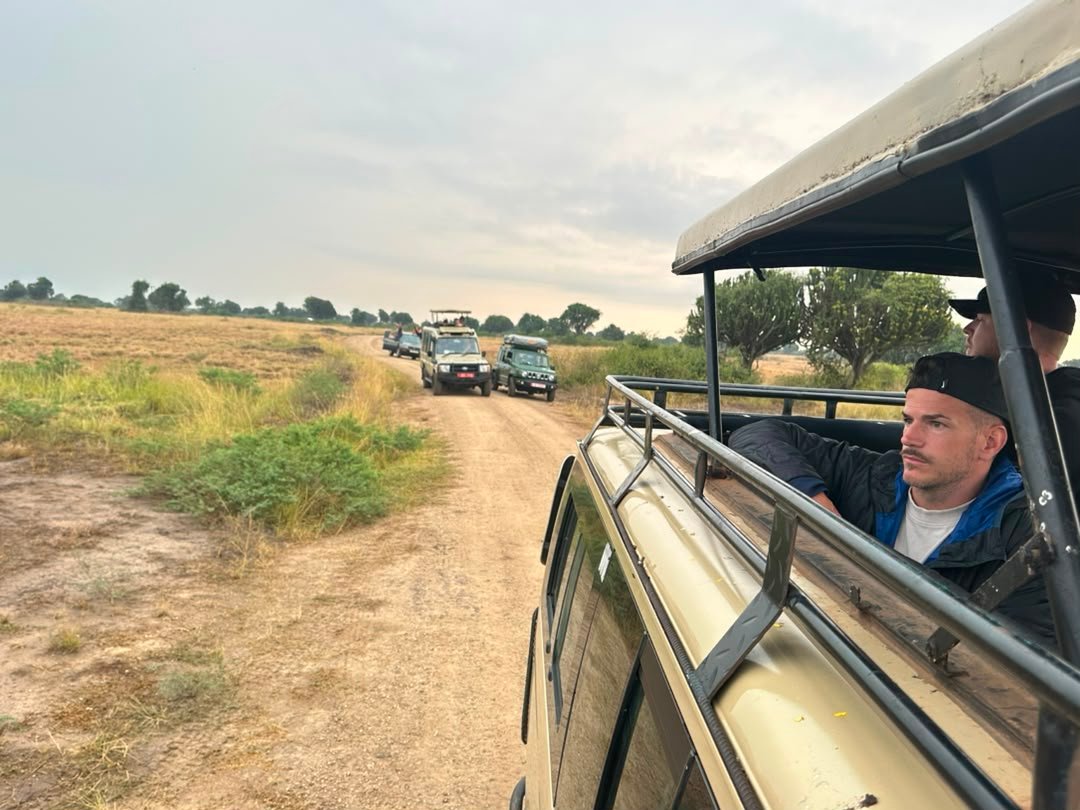
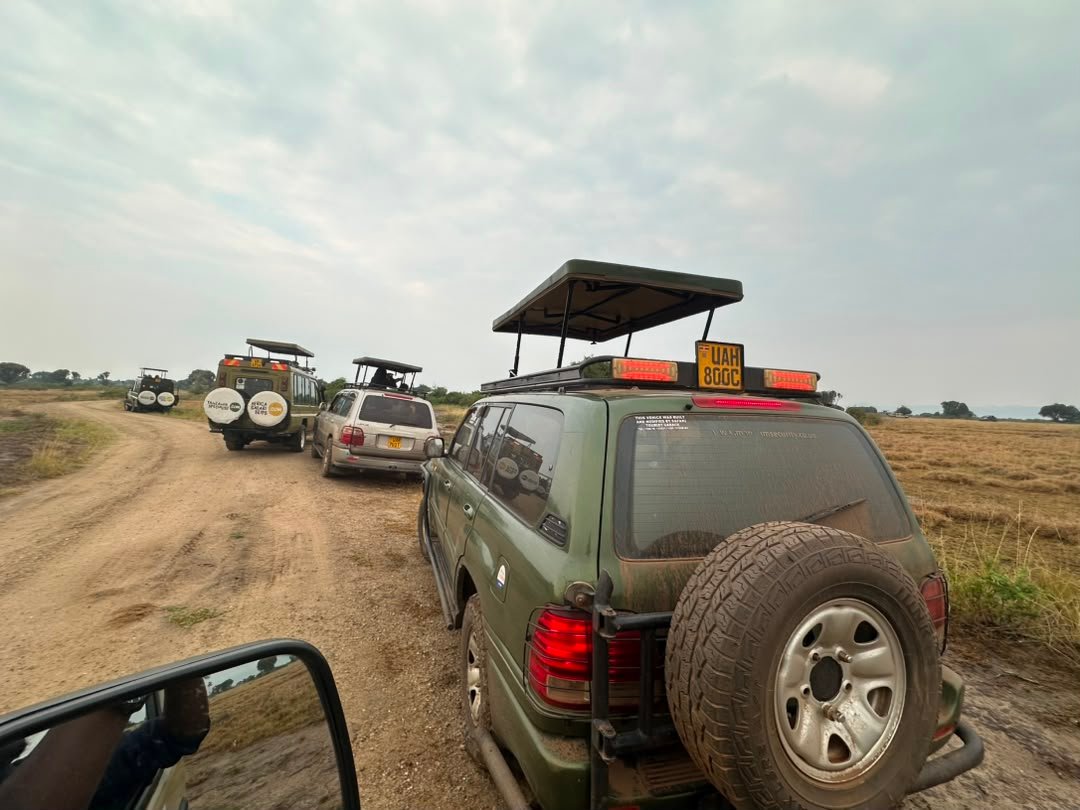
Inside Uganda’s national parks, left-hand driving remains in effect on all game tracks and approach roads, but the driving environment changes character significantly from the main highway experience. Game track speeds are slow — typically 20 to 30 kilometres per hour — which removes most of the high-speed left-hand driving challenges and replaces them with a different set of considerations. Wildlife can appear suddenly from any direction and stopping abruptly is frequently necessary, making it important to keep a safe following distance from any other vehicle on the track. In parks like Queen Elizabeth National Park and Akagera National Park, the game tracks are well-marked and signed, making navigation straightforward even for first-time self drive visitors. Always drive on the designated tracks and never drive off-road in any Uganda national park — this is both a legal requirement and an ecological responsibility that protects the park’s ecosystem. Download offline maps for the specific park you are visiting before leaving data coverage in the nearest town, as mobile signal inside parks is often unreliable.
Crossing from Uganda into Rwanda — The Traffic Direction Change
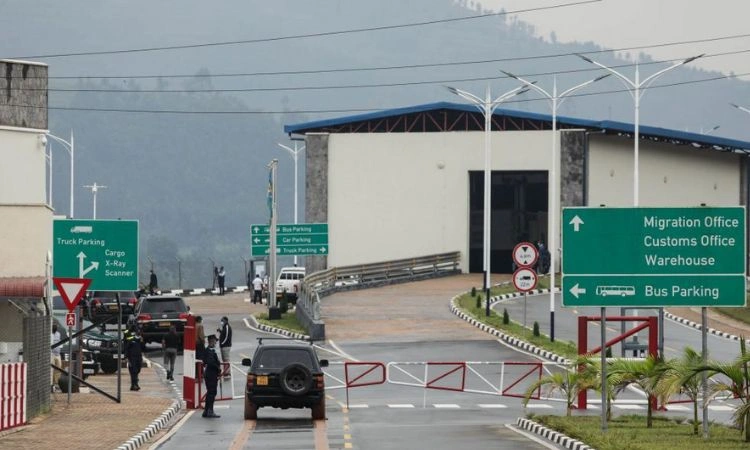
For self drive visitors combining Uganda and Rwanda on a single cross-border rental, the traffic direction change at the border is the most important transition of the entire road trip. Uganda drives on the left; Rwanda drives on the right. When you cross from Uganda into Rwanda at the Katuna–Gatuna or Cyanika border crossing, traffic direction reverses immediately on the Rwandan side and you must consciously move to the right-hand side of the road from the very first metre after the border post. Border crossings in both directions tend to involve slower speeds and a more deliberate driving pace while documentation is processed, which naturally creates a good transition window to reset your mental driving orientation before joining faster Rwandan highway traffic. Our guide on how to plan the perfect self-drive gorilla safari covers the Uganda–Rwanda border crossing experience in full, including the traffic direction change and documentation requirements at each crossing. Explore our complete range of Uganda and Rwanda self drive packages and 4×4 car hire options, or contact our team today to plan your Uganda self drive safari with full confidence behind the wheel.
Related posts

Leave a Comment