
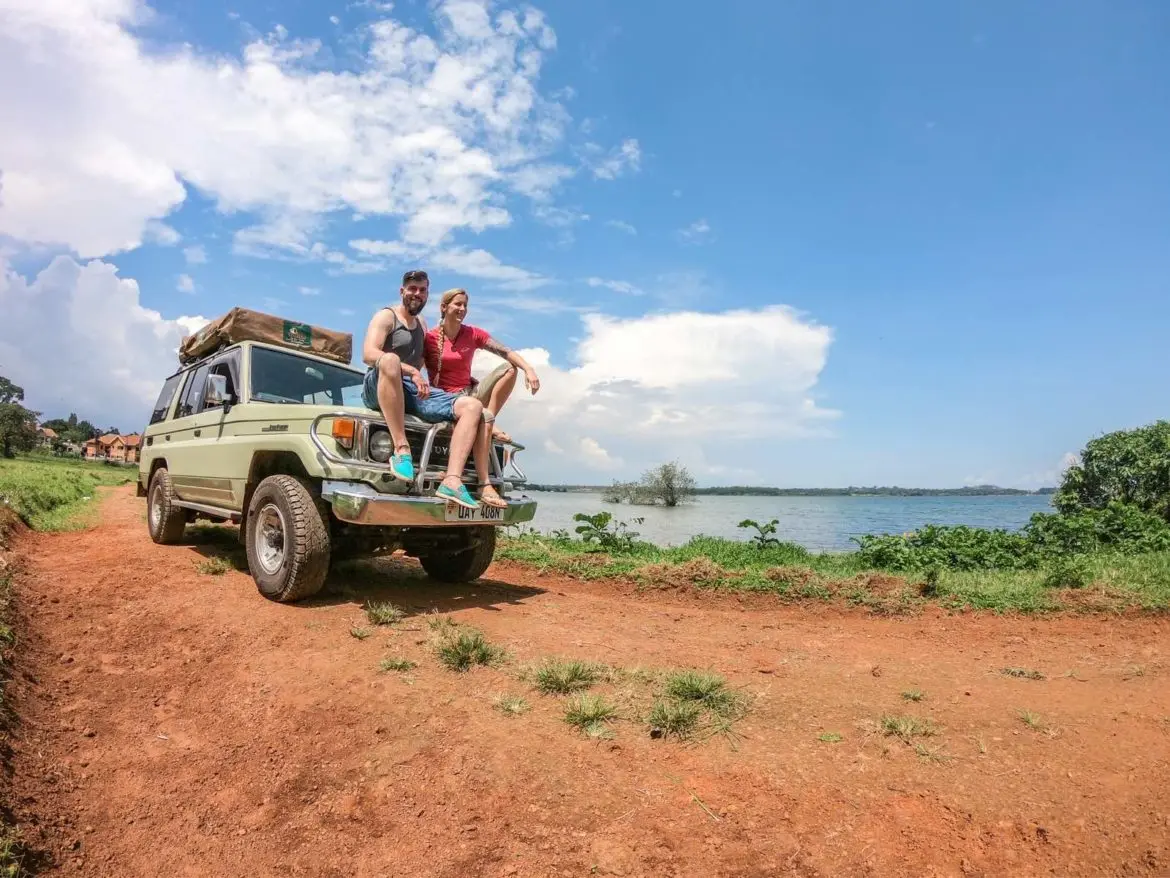
How to Plan the Perfect Self-Drive Gorilla Safari in Uganda. There is a particular kind of magic in driving yourself to meet a mountain gorilla. Long before the forest briefing, before the rangers point you toward the trail, before the first distant rustle in the undergrowth that might be your gorilla family — there is the journey itself. The drive south from Kampala through the rolling hills of Ankole, the terraced slopes around Kabale, the sudden, breathtaking descent into the misty folds of Bwindi Impenetrable Forest. A self-drive gorilla safari in Uganda turns this journey into part of the adventure, and arriving at the trailhead under your own steam, having navigated the roads yourself, adds a layer of achievement and connection to the experience that a guided transfer simply cannot replicate.
Planning a self-drive gorilla safari in Uganda is entirely achievable for independent travellers, and with the right preparation, it can be one of the most rewarding trips of your life. But gorilla trekking involves several moving parts — permits, timing, vehicle choice, accommodation, and logistics — that need to come together correctly. This guide walks you through every step, from securing your permit to packing your daypack, so that your self-drive gorilla safari runs smoothly from the moment you leave Kampala to the moment you stand, breathless, in front of a silverback in the Bwindi undergrowth. At Self Drive Safaris Uganda, we help travellers plan exactly this kind of trip every week, and this guide reflects everything we have learned along the way.
Step One: Secure Your Gorilla Trekking Permit Early
The single most important step in planning a self-drive gorilla safari in Uganda is securing your gorilla trekking permit — and this should happen before almost anything else in your planning process. Gorilla permits are issued by the Uganda Wildlife Authority and currently cost USD 800 per person for foreign non-residents, USD 700 for foreign residents, and a reduced rate in Ugandan shillings for East African Community citizens. Only a limited number of permits are issued per day across all of Uganda’s habituated gorilla families — a maximum of eight visitors per family — making availability genuinely competitive during peak periods.
Permits should be booked three to six months in advance, and during the peak season months of June to September and December to February, earlier booking is strongly advised. Permits can be booked directly through the Uganda Wildlife Authority or through a licensed tour operator, and a deposit is typically required to secure the booking, with full payment due closer to the trekking date. Once your permit is confirmed, it specifies the exact date and the specific trekking sector — Buhoma, Ruhija, Rushaga, or Nkuringo in Bwindi, or the Ntebeko sector in Mgahinga Gorilla National Park — and this single piece of information becomes the anchor around which your entire self-drive itinerary is built.
For travellers seeking an even deeper encounter, the Gorilla Habituation Experience in Bwindi’s Rushaga sector offers up to four hours with a semi-habituated gorilla family for USD 1,500 per person — a premium option for serious wildlife enthusiasts and photographers who want considerably more time in the forest than the standard one-hour visit allows.
Step Two: Choose Your Gorilla Trekking Sector Wisely
Once your permit dates are confirmed, the sector specified on your permit determines your route, your driving time, and your accommodation options — so it is worth understanding the differences between Uganda’s gorilla trekking sectors when you are deciding which permit to request in the first place.
Buhoma, in the northern sector of Bwindi, is the most accessible from Kampala and the most established in terms of tourism infrastructure, making it an excellent choice for first-time self-drive visitors. Rushaga, in the south, has the highest number of habituated gorilla families and the greatest flexibility for permit availability, and is also the exclusive home of the Gorilla Habituation Experience. Ruhija, in the east, combines gorilla trekking with some of the best birdwatching in the park, particularly along the Mubwindi Swamp trail. Nkuringo, in the far south, offers the most dramatic scenery and the most physically demanding treks, with sweeping views over the Virunga volcanoes.
Mgahinga Gorilla National Park, Uganda’s smallest park, offers an alternative gorilla trekking destination with just one habituated family — the Nyakagyezi group — and combines naturally with golden monkey tracking and volcano hiking for travellers who want a multi-activity southwestern Uganda adventure beyond gorillas alone. Our detailed guides to Bwindi Impenetrable Forest National Park and Mgahinga Gorilla National Park cover each sector and park in full detail to help you choose.
Step Three: Choose the Right 4×4 for the Journey
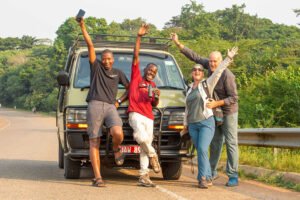
The road to Bwindi and Mgahinga is one of the most scenic — and one of the most demanding — drives in Uganda, and choosing the right vehicle for a self-drive gorilla safari is not a decision to take lightly. The final approach to every Bwindi trekking sector involves steep hairpin bends, sections of loose gravel, and stretches of red volcanic clay that become genuinely slippery during and after rainfall. A vehicle that performs perfectly on the highway from Kampala to Mbarara can struggle badly on these final kilometres if it lacks proper four-wheel drive and ground clearance.
For a self-drive gorilla safari, we recommend a Toyota Land Cruiser Prado TX or TZ as the minimum vehicle specification — a genuine 4×4 with low-range gearing, at least 218 millimetres of ground clearance, and the reliability to handle Uganda’s most demanding roads in any season. Self-drive rates for these vehicles typically range from USD 70 to USD 100 per day. For travellers visiting during the dry season and sticking to the more accessible Buhoma sector, a Toyota RAV4 4×4 can be sufficient, but for any approach during the wet season — March to May and October to November — or for the steeper Rushaga and Nkuringo approaches, the Prado or an equivalent Land Cruiser is strongly advised.
It is also worth considering a vehicle with rooftop tent and camping gear if your itinerary includes camping at any of Uganda’s national park campsites along the route — a popular option for travellers combining gorilla trekking with stops at Lake Mburo National Park or Queen Elizabeth National Park on the way to or from Bwindi. Browse our self-drive 4×4 fleet for gorilla safaris to find the right vehicle for your specific route and travel style.
Step Four: Plan Your Route From Kampala to Bwindi
The drive from Kampala to Bwindi Impenetrable Forest covers approximately 530 kilometres and takes eight to nine hours via Mbarara and Kabale — a journey that is best broken into two days for comfort, safety, and enjoyment rather than attempted in a single push, particularly given Uganda’s strong recommendation against night driving.
A popular and highly rewarding self-drive itinerary breaks the journey at Lake Mburo National Park, located approximately 245 kilometres from Kampala and just a four-hour drive along excellent tarmac. An overnight stop at Lake Mburo allows for a boat cruise on the lake, a game drive in search of zebras and elands found nowhere else in Uganda, and even a horseback safari — before continuing the following day toward Bwindi via Mbarara and Kabale. This route breaks the long journey into two manageable segments, adds an entirely different wildlife experience to your gorilla safari, and showcases some of southwestern Uganda’s most beautiful scenery along the way.
From Lake Mburo, the second day’s drive to Bwindi takes approximately five hours, passing through the terraced hills of Kigezi and the dramatic landscape around Kabale before the final descent into whichever sector your permit specifies. Allow extra time for this final approach — the roads are slower than highway driving, and arriving with time to spare before your gorilla trekking briefing the following morning, rather than rushing in at dusk, makes for a far more relaxed and enjoyable start to your gorilla experience.
For travellers wanting to extend the circuit further, Bwindi can be combined naturally with Queen Elizabeth National Park to the north — connected by a scenic route through the Ishasha sector famous for its tree-climbing lions — creating a comprehensive southwestern Uganda safari circuit. Explore our Uganda self-drive safari itineraries for detailed route planning across multiple parks.
Step Five: Book Accommodation Near Your Trekking Sector
Accommodation should be booked to align precisely with your permit’s trekking sector and date, and booking well in advance is essential — particularly during peak season when the best lodges near Bwindi’s trailheads fill up months ahead, in step with permit availability.
For Buhoma, options range from the luxury Bwindi Lodge and Mahogany Springs Lodge to the mid-range Buhoma Lodge and the budget-friendly Buhoma Community Rest Camp. For Rushaga, the Gorilla Safari Lodge Rushaga and Ichumbi Gorilla Lodge are well-regarded mid-range choices. For Nkuringo, the spectacular Nkuringo Bwindi Gorilla Lodge offers sweeping views over the park from the Nteko Ridge. For Ruhija, Broadbill Forest Camp serves birders and trekkers in the eastern sector.
Critically, plan to arrive at your accommodation the evening before your trekking date, not the morning of. Gorilla trekking briefings begin early — typically around 7:30 to 8:00 am — and arriving exhausted from a long drive that same morning is the single most common mistake self-drive gorilla safari travellers make. A relaxed evening at your lodge, an early night, and a calm morning departure to the briefing point sets the tone for the entire experience.
Step Six: Prepare Physically and Mentally for the Trek
Gorilla trekking is a genuine hike through dense, often steep, and sometimes muddy montane forest, and the duration of the search for the gorilla family can range from thirty minutes to several hours depending entirely on where the family has moved overnight. While the 98 percent success rate for gorilla encounters on permitted treks is reassuring, the physical demands of the trek itself should not be underestimated.
A reasonable level of fitness is recommended for all gorilla trekking sectors, and travellers with any concerns about fitness or mobility should discuss this with their lodge or the Uganda Wildlife Authority rangers in advance — porters are available to carry daypacks and can provide physical assistance on steeper sections, and this support is genuinely valuable and widely used. Trekking poles, if you have them or can hire them locally, make a significant difference on the steeper and muddier trails, particularly in the Nkuringo and Rushaga sectors.
Mentally, the most important preparation is patience and an open mind. The forest does not operate on a schedule, and the joy of gorilla trekking lies as much in the walk itself — through ancient forest alive with birdsong, butterflies, and the occasional glimpse of a colobus monkey in the canopy — as it does in the hour spent with the gorilla family at the end of the search.
Step Seven: Pack the Right Gear for the Forest
Packing correctly for a self-drive gorilla safari makes a meaningful difference to comfort and enjoyment on trekking day. Waterproof hiking boots with good ankle support are essential — Bwindi’s trails are frequently muddy regardless of season, and the forest floor can be slippery even on dry days. Gardening gloves or similar protective gloves are invaluable for gripping vegetation, vines, and stinging nettles on steeper sections of the trail.
Layered clothing is important, as temperatures vary considerably between the cool morning briefing and the warmer, humid conditions deep in the forest. A waterproof jacket is non-negotiable, even during the dry season, as Bwindi’s high-altitude location means rainfall can occur at any time. Long trousers tucked into socks or gaiters help protect against biting ants and nettles. A daypack with water, snacks, and a rain cover for your camera equipment completes the essentials, alongside insect repellent and sun protection for the more open sections of trail.
For the drive itself, ensure your vehicle is stocked with extra water, snacks, a reliable spare tyre, and — particularly for the Bwindi approach roads during the wet season — consider carrying a basic tow rope and traction aids, standard equipment that any reputable Uganda 4×4 rental should provide as part of the vehicle kit.
Step Eight: Build in Time for the Forest Beyond the Gorillas
One of the advantages of a self-drive gorilla safari is the freedom to extend your time in and around Bwindi or Mgahinga beyond the single hour spent with the gorilla family — and we strongly recommend doing so. A second day in the area opens up an extraordinary range of experiences that complement the gorilla encounter perfectly.
The Batwa Cultural Trail offers a profound and moving encounter with the indigenous forest people of the Bwindi and Mgahinga region, sharing their traditional knowledge of the forest in a guided walk that adds deep human context to your visit. Guided nature walks through the forest — to waterfalls, through the Mubwindi Swamp for birding, or simply along quieter trails — reveal Bwindi’s extraordinary biodiversity at a more relaxed pace than the gorilla trek allows. For those visiting Mgahinga, golden monkey tracking and volcano hikes to Mount Gahinga or Mount Sabinyo add an entirely different dimension to the visit.
Building one additional day into your self-drive itinerary — either before or after your gorilla trekking date — transforms the trip from a single extraordinary encounter into a rich, multi-faceted southwestern Uganda experience.
Step Nine: Plan Your Return Route and Onward Journey
Many self-drive gorilla safari travellers use Bwindi as the turning point of a larger Uganda circuit rather than a there-and-back journey. From Bwindi, the route west and north toward Queen Elizabeth National Park via the Ishasha sector is one of Uganda’s most scenic drives, and from there the circuit can continue to Kibale Forest National Park for chimpanzee trekking before looping back toward Kampala via Fort Portal and Mubende.
Alternatively, travellers combining Uganda with a Rwanda gorilla trekking experience can continue from Bwindi to the Katuna border crossing into Rwanda, reaching Volcanoes National Park in approximately four to five hours for a cross-border gorilla and golden monkey adventure that showcases both countries’ primate destinations in a single trip. Whatever your onward route, planning it before you depart Kampala — rather than improvising once you are on the road — ensures that accommodation, fuel stops, and driving distances are all comfortably manageable.
Begin Planning Your Self-Drive Gorilla Safari Today
A self-drive gorilla safari in Uganda is one of the most rewarding independent travel experiences available anywhere in the world — combining the freedom and intimacy of self-drive exploration with one of the planet’s most profound wildlife encounters. With your permit secured early, the right 4×4 beneath you, a sensible two-day route to Bwindi, accommodation booked in step with your trekking date, and the right gear in your daypack, every element of the journey comes together into something genuinely unforgettable.
At Self Drive Safaris Uganda, we provide the vehicles, the route guidance, and the on-the-ground support to make this journey as smooth as possible — so that the only thing you need to focus on is the moment the forest parts and a silverback looks back at you. Explore our self-drive gorilla safari vehicle options and itineraries and get in touch with our team today to start planning the adventure of a lifetime.
Related posts

Leave a Comment