
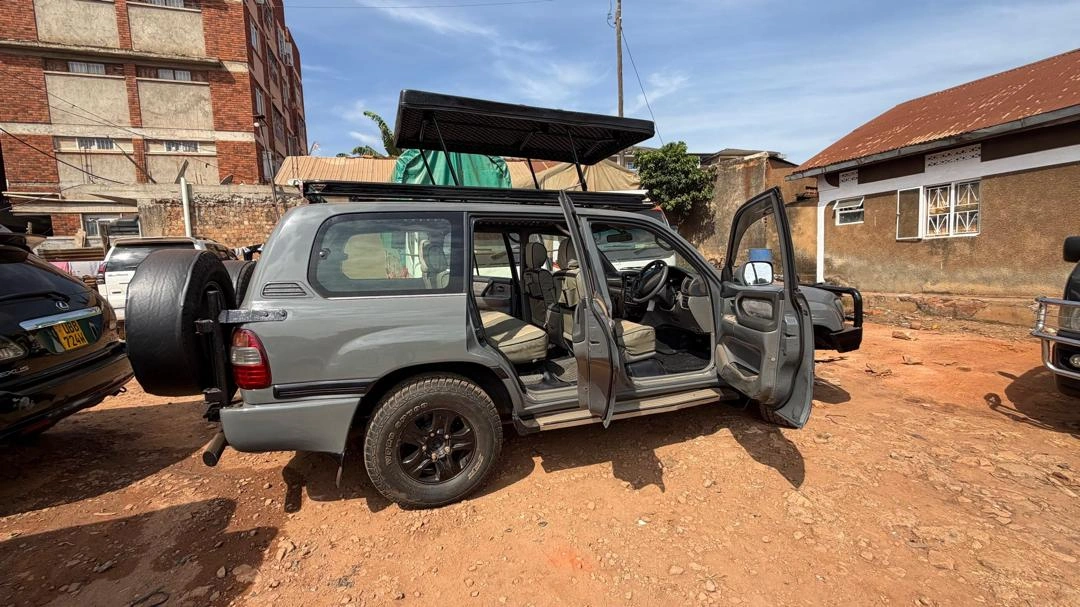
Why Rent a 4×4 in Uganda for Your Safari? Uganda is one of the most diverse and rewarding safari destinations in all of Africa. In a single trip, you can track mountain gorillas through ancient mist-covered forest, watch lions patrol open savannah plains, cruise the Nile past enormous pods of hippos, and hike to a summit glacier above 5,000 metres. But there is one thing that almost every corner of this extraordinary country has in common — to reach it properly, comfortably, and safely, you need a 4×4 vehicle.
This is not simply a matter of preference or comfort. It is a practical reality shaped by Uganda’s terrain, its road network, its national park tracks, and the sheer distances involved in moving between its most spectacular destinations. Whether you are planning to drive yourself or hire a vehicle with a professional driver, choosing to rent a 4×4 in Uganda is one of the most important decisions you will make when planning your safari. At Self Drive Safaris Uganda, every vehicle in our fleet is a proper 4×4 — and in this guide, we explain exactly why that matters.
Uganda’s Roads Demand a Proper 4×4
Uganda’s road network has improved significantly in recent years, and the main highways connecting Kampala to Mbarara, Fort Portal, Gulu, and Mbale are in good condition and perfectly manageable in any vehicle. But a Uganda safari does not stay on the highway. The moment you turn off toward a national park gate, the character of the road changes completely — and that change is where the 4×4 earns its place.
The roads inside Uganda’s national parks are almost entirely unpaved. They are built of murram, gravel, and compacted earth, and they traverse terrain that includes riverbeds, rocky hillsides, waterlogged grassland, and dense forest approaches. During the dry season, these roads are dusty and corrugated — uncomfortable in a standard vehicle, manageable in a well-sprung 4×4. During the wet season, from March to May and October to November, the same roads can become deep mud, loose clay, and flooded crossings that will stop a two-wheel-drive vehicle completely and challenge even an unprepared 4×4.
The drive to Bwindi Impenetrable Forest for gorilla trekking is perhaps the most famous example. The final approach to Buhoma, Rushaga, Ruhija, or Nkuringo involves steep hairpin bends, loose gravel sections, and stretches of red clay that become seriously slippery after rain. More than one saloon car has been stuck on these roads, turning a gorilla trekking morning into a vehicle recovery operation. A capable 4×4 with low-range gearing and good ground clearance handles this approach with confidence in every season.
The road to Kidepo Valley National Park in the far northeast — Uganda’s most remote national park — is another that demands serious off-road capability. The tracks through Karamoja become sandy, rocky, and deeply rutted after the rains, and the distances between fuel stations require careful planning and sometimes additional fuel capacity. For travel to Kidepo, a Toyota Land Cruiser is not just recommended — it is essentially mandatory.
Ground Clearance and Traction: Why They Matter on Safari
A 4×4 vehicle is built differently from a standard car in ways that go far deeper than marketing. The two features that matter most in Uganda’s safari environment are ground clearance and four-wheel traction — and understanding why they matter helps explain why even experienced drivers choose to rent a 4×4 in Uganda rather than attempt these roads in anything else.
Ground clearance refers to the distance between the lowest point of the vehicle’s underside and the road surface. A standard saloon car sits approximately 140 to 160 millimetres from the ground — enough for smooth tarmac, but dangerously low for the rocks, ruts, tree roots, and raised road edges found on Uganda’s park tracks. A Toyota Land Cruiser Prado, by contrast, sits at approximately 218 millimetres of ground clearance, and a fully modified safari Land Cruiser can reach 220 to 250 millimetres. That difference is the gap between a comfortable crossing and a broken sump, a stuck vehicle, or a long wait for roadside assistance in a remote national park.
Four-wheel drive traction — the ability to distribute power to all four wheels simultaneously — is what keeps a vehicle moving when two wheels lose grip in mud, sand, or loose gravel. On a steep, wet approach road into a national park, a standard two-wheel drive vehicle struggles because the driven wheels spin without purchase. A 4×4 in low-range gear, by contrast, distributes torque evenly across all four wheels, maintaining forward momentum even on the most challenging surfaces. This is the difference between arriving at your gorilla briefing on time and watching the sunrise from a hillside where your vehicle is stuck.
The Pop-Up Roof: Transforming the Game Drive Experience
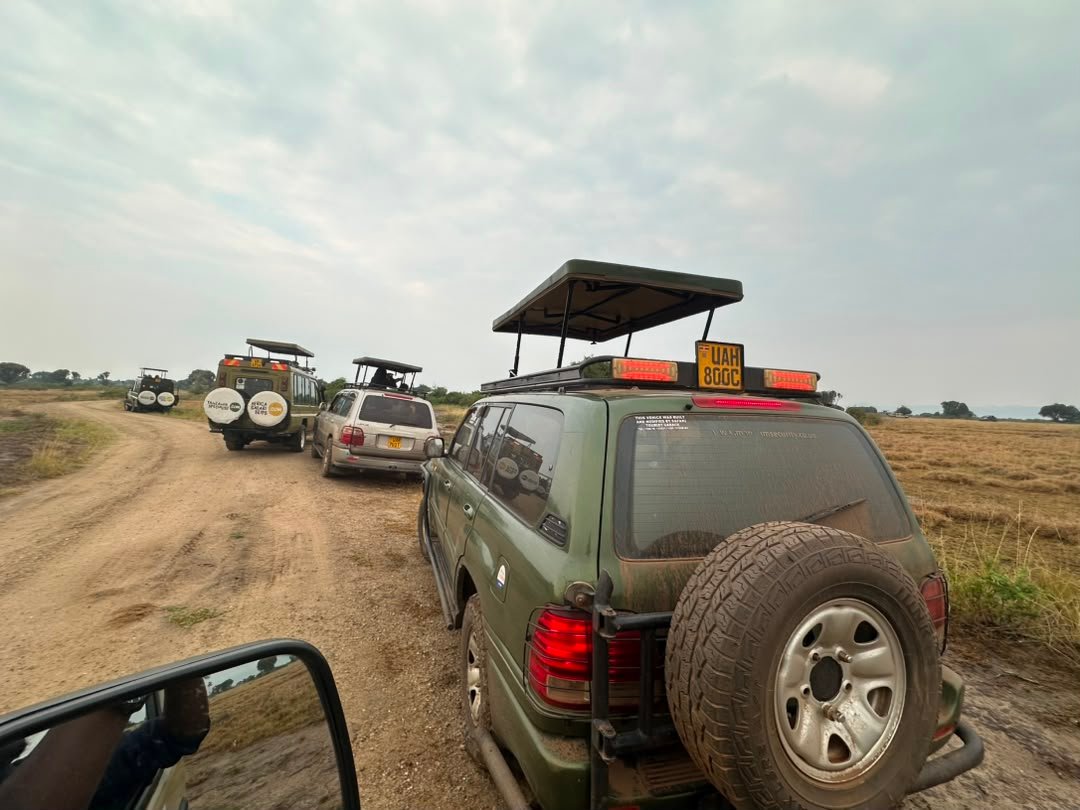
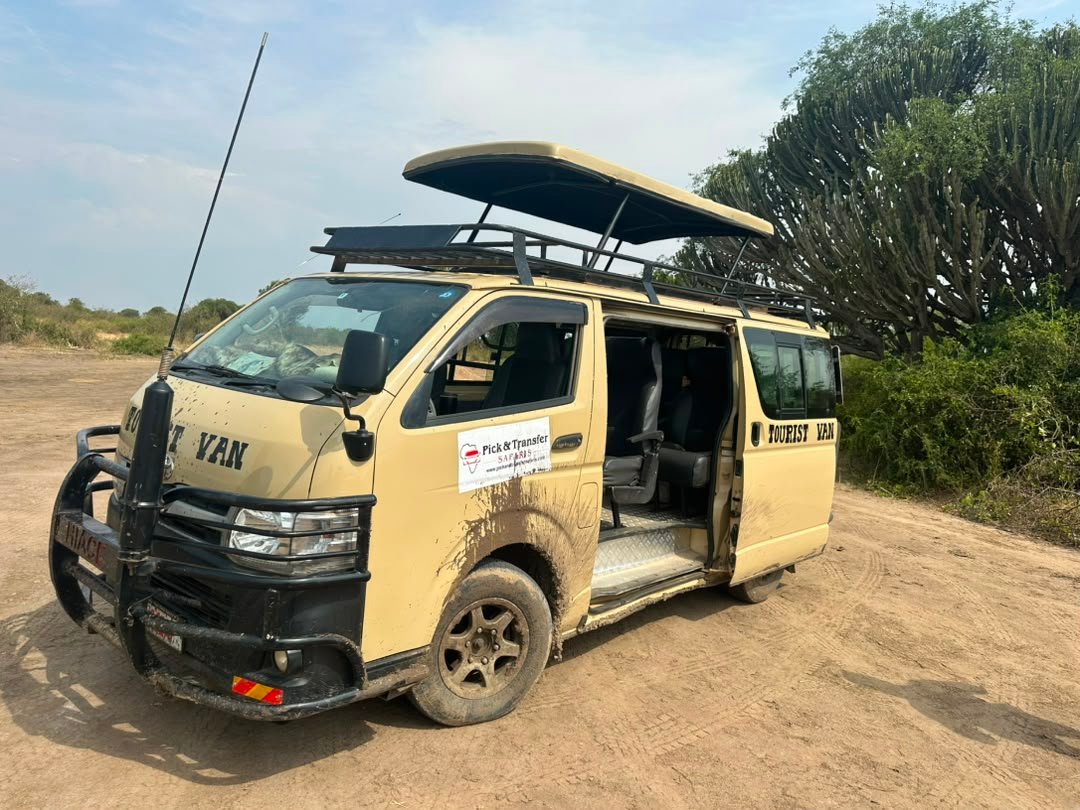
Beyond the mechanical necessity of four-wheel drive, the best safari 4×4 vehicles in Uganda offer a feature that transforms the entire game drive experience — the pop-up roof. This raised canvas or hardtop section of the vehicle roof lifts during game drives, allowing passengers to stand, scan the horizon in every direction, and photograph wildlife completely unobstructed by windows, roof pillars, or glass reflections.
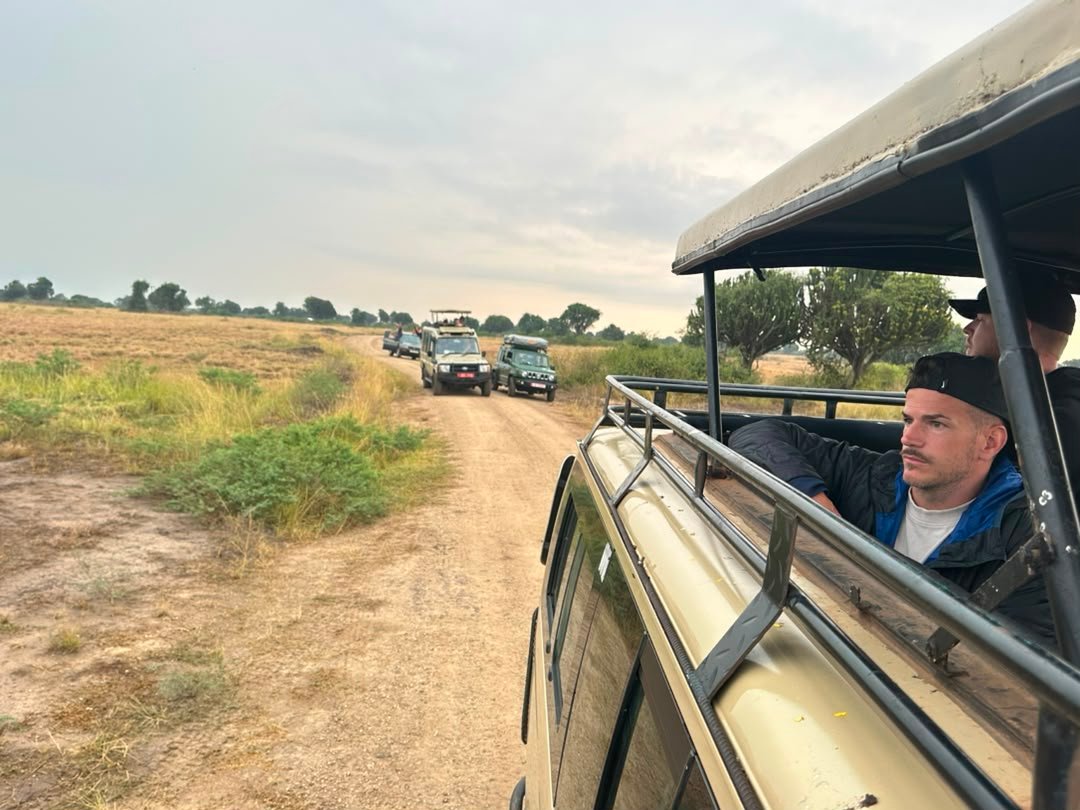
The difference between experiencing a game drive from inside a standard closed vehicle and standing through an open pop-up roof is dramatic. When a pride of lions is resting fifty metres away, or a herd of elephants is crossing the road directly ahead, the ability to stand and observe — to feel the warm morning air, to hear the sounds of the savannah without glass between you and the landscape — elevates the encounter from a sightseeing experience to something genuinely immersive. For photographers, the elevated angle and unobstructed view that a pop-up roof provides makes it the single most important equipment decision of the entire trip.
Animals in Uganda’s national parks are accustomed to safari vehicles and tend to ignore them entirely — treating the vehicle as a harmless part of the landscape. This habituation means that a vehicle can approach wildlife much more closely than a person on foot would ever be permitted to. When you stand through the roof, you are elevated above the vehicle’s protective silhouette, yet still carried by it — giving you a front-row view of African wildlife at distances that feel extraordinary. In Murchison Falls National Park, in Queen Elizabeth National Park, and in Kidepo Valley, the pop-up roof safari Land Cruiser is not a luxury — it is the standard tool for experiencing these parks at their best.
Freedom and Flexibility: The Self-Drive Advantage
Beyond the practical and mechanical benefits, renting a 4×4 in Uganda for a self-drive safari delivers something that no guided tour in a shared vehicle can replicate — complete freedom. Freedom to set your own alarm, to linger at a leopard sighting for as long as you choose, to take a different road on a whim, to stop for fifteen minutes because a flock of birds you do not recognise is moving through the undergrowth and you want to watch them properly.
A self-drive safari in Uganda means that your itinerary belongs to you. If the morning game drive in Murchison Falls yields a pride of lions on a kill and you want to stay and watch for two hours, nobody is counting the time. If you decide on arrival at Lake Mburo that you want to extend your stay by a day because the evening light over the lake is extraordinary, the decision is yours. If a local community tells you about a crater lake viewpoint that is not on any itinerary, you can drive there.
This quality of freedom — rare and deeply satisfying — is what draws a growing number of Uganda’s most discerning travellers toward self-drive safaris every year. Uganda’s improving road network, its well-marked national park tracks, and the approachable warmth of its people make it one of the most rewarding self-drive destinations in Africa. And with the right 4×4 underneath you, the roads that might seem daunting from the outside become part of the adventure itself. Explore our full range of self-drive safari vehicles and itineraries for Uganda to start planning your independent adventure.
Reaching Remote Destinations That Others Miss
One of the most compelling reasons to rent a 4×4 in Uganda is the access it gives you to destinations that simply do not appear on most group tour itineraries — places that reward the effort of getting there with a quality of wilderness experience that more accessible parks cannot match.
Kidepo Valley National Park is the supreme example. Located 700 kilometres from Kampala in the remote northeast, this park is consistently ranked among Africa’s finest and least visited national parks — and its remoteness is precisely what preserves its extraordinary quality. Getting there in a capable 4×4, driving the final approach through the Karamoja landscape as the Didinga Hills rise ahead of you and the park’s sweeping savannah comes into view, is an experience of arrival that feels genuinely earned. The park rewards the journey with wildlife encounters of remarkable intimacy — lions at close range, cheetahs on open ground, and a sense of being alone in the wild that is increasingly difficult to find anywhere on the continent.
Equally, the upper approach roads to the Rwenzori Mountains, the Ishasha sector of Queen Elizabeth National Park where tree-climbing lions lounge in fig trees, and the remote northern reaches of Murchison Falls near the Sudan border are all destinations that a confident 4×4 driver can reach independently — and that remain largely beyond the reach of standard vehicle tourism. For travellers who want to go deeper into Uganda than the mainstream itinerary allows, a 4×4 is the essential key. Read more about Uganda’s most rewarding remote destinations in our Uganda national parks guide.
Safety and Reliability in Remote Areas
Safety is another compelling reason to rent a properly maintained 4×4 rather than the cheapest available vehicle. Uganda’s national parks are genuinely remote — distances between towns and fuel stations can be significant, phone signal is intermittent or absent in many park areas, and a vehicle breakdown in the middle of Murchison Falls or Kidepo Valley is a serious situation that requires a reliable vehicle to prevent.
A well-maintained 4×4 from a reputable rental operator comes with a full mechanical service history, working spare tyre and jack, a basic toolkit, a first-aid kit, and — from the best operators — 24-hour roadside assistance. These features matter not as abstract insurance but as practical safety nets that give travellers the confidence to drive Uganda’s remote roads without anxiety. At Self Drive Safaris Uganda, every vehicle in our fleet is regularly serviced, comprehensively insured, and equipped with the tools and equipment needed to handle Uganda’s most demanding routes safely and confidently.
Which 4×4 Is Right for Your Uganda Safari?
The right 4×4 for a Uganda safari depends on your group size, your destination, your budget, and your travel style. For couples or small groups visiting accessible parks such as Lake Mburo, Queen Elizabeth, and Kibale Forest on well-maintained roads, the Toyota RAV4 4×4 is an excellent and economical choice. For multi-park circuits covering Murchison Falls, Bwindi, and Kidepo, the Toyota Land Cruiser Prado TX or TZ is the most popular and versatile option — capable, comfortable, and reliable on every road Uganda has to offer.
For families or groups of up to seven, or for travellers who want the ultimate game drive experience, the Safari Land Cruiser with pop-up roof is the vehicle that defines the Uganda safari experience. And for adventurers planning a camping safari — sleeping inside the parks at Uganda Wildlife Authority campsites — a Land Cruiser fitted with a rooftop tent, fridge, and full camping kit turns the entire national park network into your accommodation.
Whatever your needs, our team at Self Drive Safaris Uganda is ready to match you with the right vehicle, advise on the best routes for your itinerary, and ensure you have everything you need for a safe, rewarding, and completely independent Uganda safari. Browse our fleet and get in touch today — your 4×4 adventure through the Pearl of Africa is waiting.
Related posts

Leave a Comment