
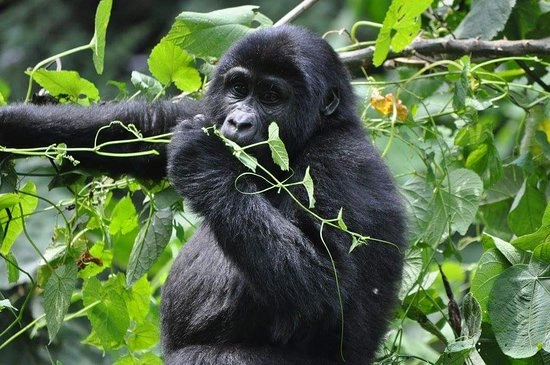
There are moments in travel that permanently alter your sense of what the world contains. Standing in ancient highland forest, heart pounding after hours of trekking through dense undergrowth, as a silverback mountain gorilla turns to regard you with calm, intelligent eyes — this is one of them. Gorilla trekking in Rwanda and Uganda is not simply a safari activity. It is a confrontation with something profound, a reminder that we share this planet with creatures of extraordinary complexity, and that fewer than 1,100 of them remain alive on Earth.
Both Rwanda and Uganda offer access to these magnificent animals, and the question of which country to choose — or whether to combine both — is one that every serious wildlife traveller eventually faces. This guide will walk you through everything you need to know.
Why Mountain Gorillas Are Unlike Any Other Wildlife Experience
Most wildlife encounters involve distance. You observe lions from a vehicle, watch elephants cross the plain from 200 metres away, spot a leopard draped in a tree through binoculars. Gorilla trekking removes that distance entirely. Uganda Wildlife Authority regulations permit a maximum of eight visitors per gorilla family per day, and you may spend one hour with the group at close range — sometimes just a few metres from the silverback himself.
The intimacy of the experience is what sets it completely apart. You watch infant gorillas tumble and play. You observe mothers nurse their young with unmistakable tenderness. You see the silverback yawn — an extraordinary display of curved yellow canines — then settle back into unhurried repose, utterly unbothered by your presence. The behavioural richness on display in that single hour rivals anything the natural world offers, and the emotional impact stays with travellers for the rest of their lives.
It is worth understanding exactly what makes this possible. Habituated gorilla families have been slowly accustomed to human presence over years of careful, patient work by conservation teams. The habituation process takes two to three years and involves daily supervised contact so that the gorillas come to regard human observers as harmless and unremarkable. This conservation work is extraordinary, and the permit fees that fund your trek flow directly back into its continuation.
Uganda: Bwindi Impenetrable Forest and the Case for the Pearl of Africa
Uganda is home to roughly half of all remaining mountain gorillas, concentrated primarily in two locations: Bwindi Impenetrable National Park and Mgahinga Gorilla National Park. Bwindi is the larger and more celebrated of the two, a UNESCO World Heritage Site draped across the steep hills of southwestern Uganda, and widely considered the finest gorilla trekking destination on the continent.
What makes Bwindi exceptional is variety. The park harbours over 400 habituated gorillas spread across more than ten family groups, meaning there are more gorilla families available for trekking here than anywhere else on Earth. Different sectors of the park — Buhoma, Ruhija, Nkuringo, and Rushaga — offer distinct landscapes and terrain, from the relatively gentle northern forest to the steep and dramatic southern slopes. Experienced guides know which sectors suit different fitness levels, and our team at Pick & Transfer Safaris is always happy to help match you to the right trekking sector for your party.
Uganda’s gorilla permit is priced at USD $800 per person, one of the most significant single expenditures in African wildlife travel — and one of the most worthwhile. The permit covers your guided trek, your one hour with the gorilla family, and your park entry fee.
Beyond gorilla trekking, Uganda’s great advantage is everything else the country contains. A 7 Days Best of Uganda Tour builds the gorilla experience into a complete East African safari circuit, combining it with chimpanzee trekking in Kibale Forest, tree-climbing lions in Queen Elizabeth’s Ishasha sector, and the dramatic thundering spectacle of Murchison Falls on the Victoria Nile. No other country in Africa offers this concentration of extraordinary wildlife experiences in such compact geography.
Rwanda: Volcanoes National Park and the Home of Dian Fossey
Rwanda’s gorilla country is the Virunga Massif — a chain of eight towering volcanoes straddling the borders of Rwanda, Uganda, and the Democratic Republic of Congo. Volcanoes National Park in Rwanda’s northwest provides the setting for one of the most storied gorilla conservation stories on Earth. Dian Fossey conducted her landmark research in these mountains, and her grave at the Karisoke Research Centre lies within the park boundaries. The legacy of her work is felt in every aspect of the experience.
Rwanda has invested heavily in positioning gorilla trekking as a premium luxury experience. Kigali is a well-connected international hub with direct flights from many European and Middle Eastern cities, making Rwanda often the more convenient entry point for international travellers. The drive from Kigali to Volcanoes National Park takes approximately two to three hours through compelling highland scenery.
The gorilla permit in Rwanda is priced at USD $1,500 per person — significantly higher than Uganda’s equivalent. The Rwandan government made a deliberate policy decision to position gorilla trekking firmly in the luxury segment, and the lodges that have developed around the park reflect this orientation, with several extraordinary high-end properties now operating in the area.
Combining Both: The Rwanda-Uganda Gorilla Route
For travellers with the time and budget, combining gorilla trekking in both countries is a genuinely remarkable itinerary. The crossing between Rwanda’s Volcanoes National Park and Uganda’s Bwindi Impenetrable Forest via the Cyanika border is manageable and well-trodden. It is possible to trek with gorillas on the Rwandan side of the Virungas on one day, cross the border, and trek with a different family entirely in Bwindi just days later — experiencing the same species in two entirely distinct forest environments and conservation contexts.
This combined routing is something our team at Pick & Transfer Safaris has extensive experience designing. Whether you are arriving into Kigali and planning to exit through Entebbe, or building a broader Uganda safari with a Rwanda gorilla extension, the logistics are straightforward with the right operator.
Planning Your Trek: What You Need to Know
Fitness and Preparation
Gorilla trekking is classified as moderate to strenuous. The terrain in Bwindi in particular is steep, dense, and often muddy. The duration of the trek depends entirely on where the gorilla family has moved overnight — some groups are encountered within an hour of setting out, others require a full day of forest walking. Most treks last between two and six hours of walking time. Good walking shoes or boots with ankle support are essential, along with lightweight waterproof layers and a day pack. Porter assistance is available at both Bwindi and Volcanoes and is warmly recommended — it supports local livelihoods and genuinely transforms a demanding hike into a comfortable one.
When to Go
The two main dry seasons — June to September and December to February — are considered optimal for gorilla trekking. Trails are drier, undergrowth is somewhat less impenetrable, and the weather is more predictable. That said, gorillas can be tracked year-round, and the rainy seasons have their own rewards: fewer visitors, lush forest scenery, and reduced park congestion. Our safari planning team can advise on timing for specific travel dates.
Permits and Advance Booking
This cannot be overstated: gorilla permits sell out months in advance, particularly for the peak June-to-September season. Uganda’s UWA allocates a strictly limited number of permits per gorilla family per day, and popular families can be fully booked six months or more ahead. Rwanda’s permits operate similarly. It is strongly advised to secure your permit allocation at the point of booking your safari, not as an afterthought. Our team handles permit acquisition as part of the full tour package — you will never arrive to find your permit unavailable.
What to Bring
Beyond appropriate clothing and footwear, pack insect repellent, sunscreen, and a camera with spare batteries. Flash photography is prohibited in the gorilla’s presence. A hat and garden gloves for pushing through vegetation are useful. Leave strong perfume and scented products at the lodge — the guidance from Uganda Wildlife Authority is to minimise any unfamiliar scents in the gorillas’ immediate environment.
Getting There: Arrivals via Kampala and Kigali
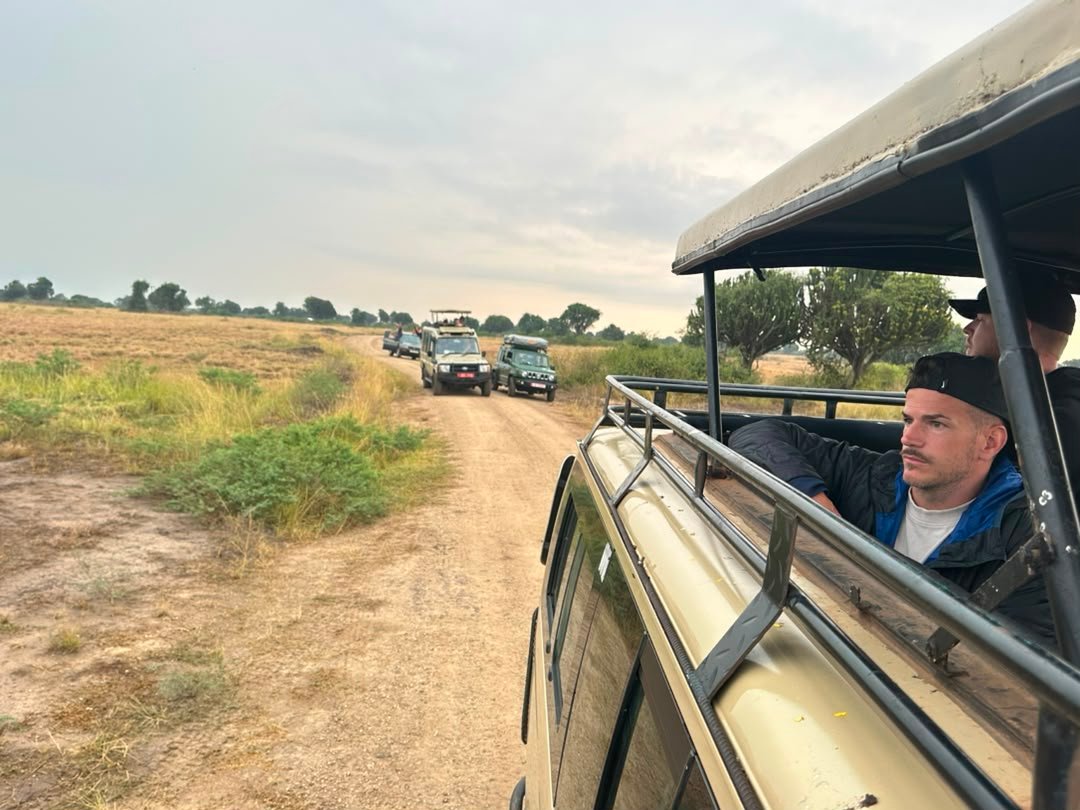
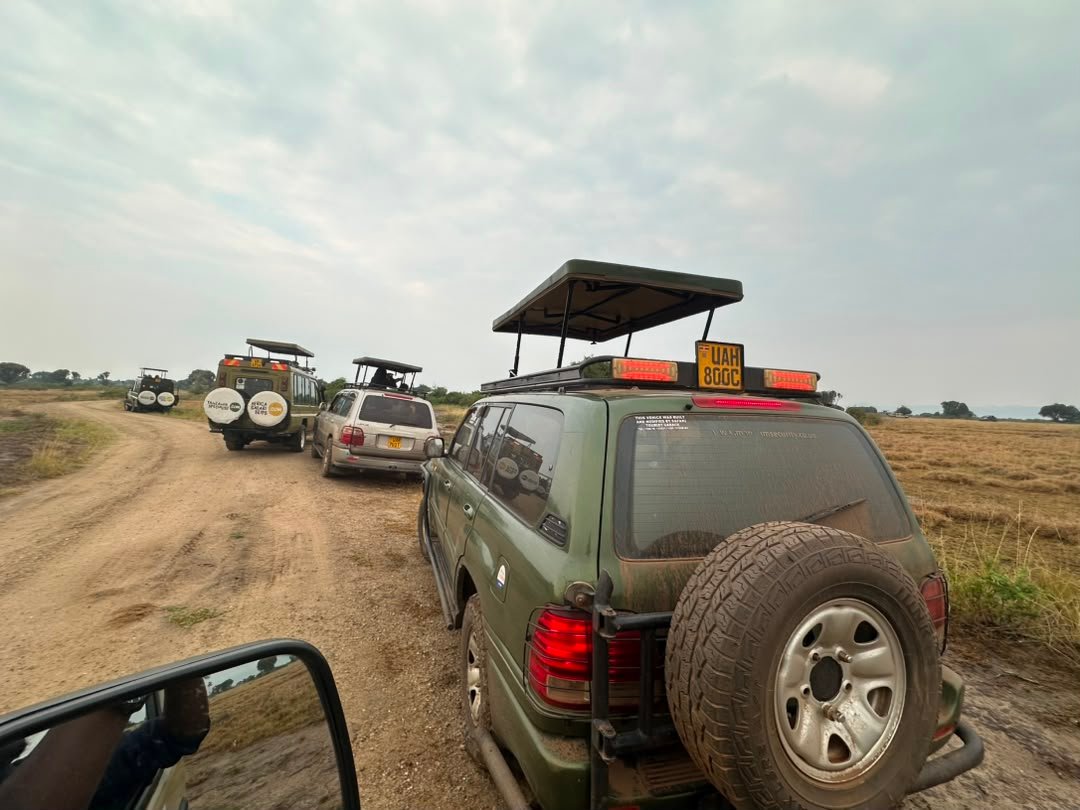
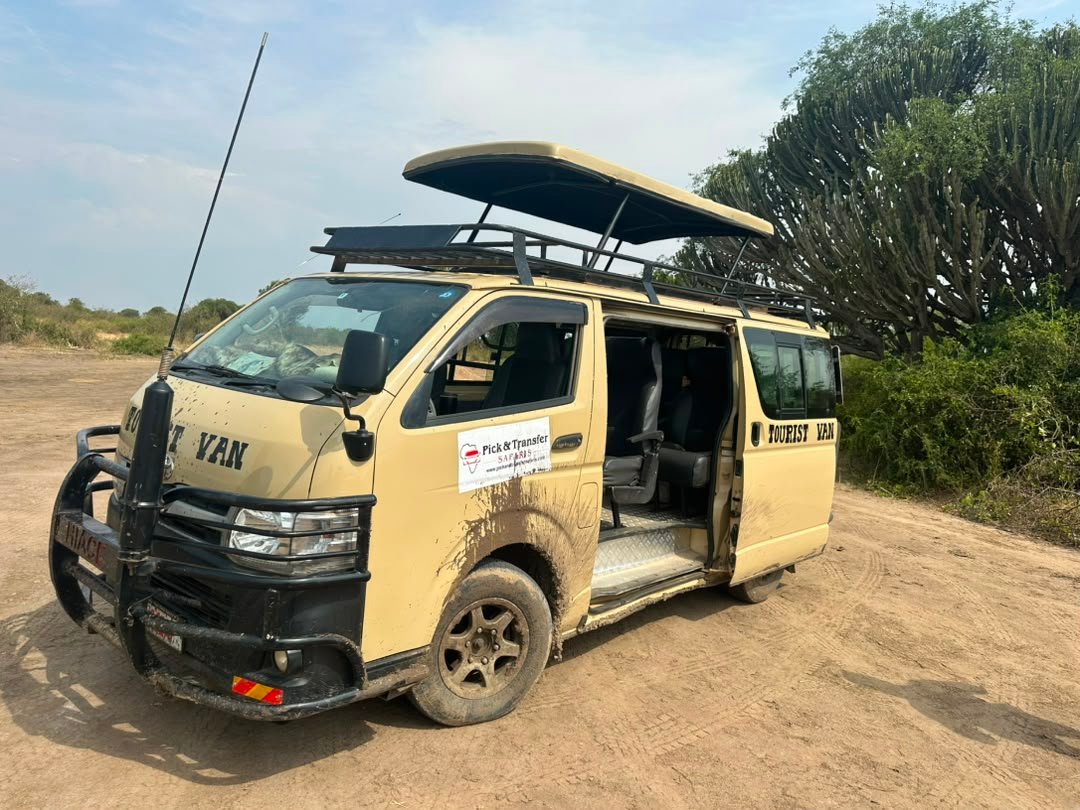
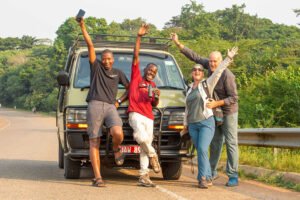
Uganda is served by Entebbe International Airport, approximately 40 kilometres from Kampala. From Kampala, the drive to Bwindi takes approximately seven to nine hours, typically broken with an overnight stop en route or staged over a multi-day safari circuit. Our private 4×4 Land Cruisers are fully equipped for this journey, with experienced driver-guides who handle every detail of the road transfer.
Rwanda is served by Kigali International Airport, and the transfer from Kigali to Volcanoes National Park takes two to three hours. For travellers arriving in Kigali who wish to trek in Uganda’s Bwindi, the transfer across the Cyanika border is a practical and scenic option that our partner network manages seamlessly.
Conservation: Why Your Permit Fee Matters
Every USD $800 or $1,500 permit fee contributes directly to the protection of mountain gorillas and the communities that live alongside them. Uganda’s UWA directs a portion of all gorilla permit revenue to community development projects in the buffer zones around Bwindi — schools, health centres, and income-generating projects that give local people a tangible stake in the gorillas’ survival. Rwanda’s revenue sharing model functions similarly, with communities receiving a direct percentage of all park entry fees.
When you trek with mountain gorillas through Pick & Transfer Safaris, you are participating in one of conservation’s genuine success stories. Mountain gorilla numbers have grown from under 650 individuals in 2008 to approximately 1,100 today — the only great ape population currently increasing. Your visit is part of the reason why.
Book Your Rwanda Uganda Gorilla Safari Today
Whether you choose Uganda’s Bwindi, Rwanda’s Volcanoes, or the extraordinary combination of both, gorilla trekking belongs on every serious traveller’s list. The experience is irreplaceable, the conservation stakes are real, and the memory will remain for the rest of your life.
Contact our team at Pick & Transfer Safaris today to begin planning your Rwanda Uganda gorilla trekking safari. Permits are strictly limited — and your silverback is waiting.
Related posts

Leave a Comment