
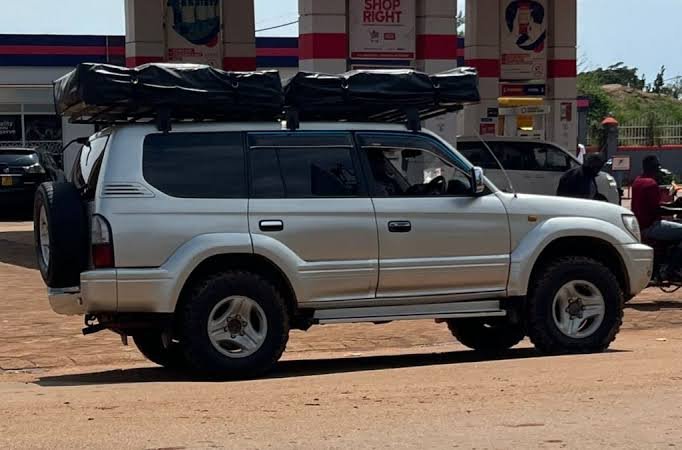
Why choose a land cruiser Prado for safari.The Toyota Land Cruiser Prado is the benchmark safari vehicle for Uganda’s national park circuit — not by default or convention, but because its specific combination of capability, tank range, ground clearance, and reliable diesel torque aligns almost exactly with what Uganda’s circuit roads demand from a self drive vehicle. Understanding why the Prado earns this position — rather than simply accepting it as the standard recommendation — helps a visitor make the vehicle decision with the right reasoning and avoid the two most common errors in Uganda safari vehicle selection: underspecifying with a RAV4 for a circuit that includes roads beyond its capability, or overspecifying with a Land Cruiser V8 on a circuit that the Prado handles without compromise and at a lower daily rate. This guide covers the specific mechanical and practical reasons the Prado is the correct choice for most Uganda self drive circuits, the park-specific scenarios where its capability is essential rather than merely useful, and how it balances against the V8 for visitors weighing a step up. Browse our car hire and self drive options and self drive fleet for Prado availability and specification details.
The Prado’s Position in the Safari Vehicle Hierarchy
Uganda’s safari vehicle rental market offers three tiers: the Toyota RAV4 Safari at the entry level, the Toyota Land Cruiser Prado at the benchmark middle tier, and the Toyota Land Cruiser V8 at the maximum capability and comfort level. The Prado occupies the middle tier not because it is a compromise between the other two but because it is genuinely the most appropriate vehicle for the majority of Uganda circuits — capable enough for every park on the western and northern circuit, comfortable enough for Uganda’s longest transfer days, and priced below the V8 for circuits where the V8’s additional capability is not required. The RAV4 is the right vehicle only for circuits that deliberately avoid Bwindi, Semliki, and wet-season murram — a specific subset of Uganda’s self drive options. The V8 is the right vehicle for circuits that push into the most demanding remote roads in the wet season or carry groups requiring three rows of seating. For every circuit between these two specific use cases — which is the majority of Uganda self drive itineraries — the Prado is the vehicle that the road actually requires and the V8’s extra cost buys nothing the Prado cannot already deliver.
Low-Range Four-Wheel Drive — The Capability That Changes Everything
The most significant mechanical distinction between the Prado and the RAV4 is not power output or body size but the availability of a genuine low-range transfer case. The Prado’s four-wheel drive system includes a selectable low-range setting that multiplies available torque at the wheels while reducing road speed — the mode that transforms a demanding murram climb from a momentum-dependent gamble into a controlled, unhurried ascent. On Bwindi Impenetrable National Park’s sector approach roads — where the gradient is steep, the surface is loose laterite, and the ruts are deep — low-range engagement allows the vehicle to maintain traction and directional control at walking pace without the engine labouring or the tyres spinning for grip. The RAV4’s all-wheel drive system distributes power between axles electronically but does not provide the gear multiplication that low range delivers — which is precisely why the RAV4 cannot be recommended for Bwindi’s approach roads regardless of condition. The Prado’s low-range capability is equally relevant on the escarpment road into Semliki National Park, on Kidepo’s northern approach through the Agoro hills, and on any Uganda murram section that combines gradient with wet-season surface softening.
Ground Clearance and Approach Geometry
The Prado’s ground clearance — the distance between the lowest point of the vehicle’s undercarriage and the road surface — is meaningfully greater than the RAV4’s, and on Uganda’s rutted murram approach roads this difference translates directly into whether the vehicle grounds out on track crests and drainage channels or clears them cleanly. Uganda’s approach roads to remote park sectors are not uniformly rough — they are variable surfaces interrupted by specific technical obstacles: deep drainage channels that cross the track at right angles, erosion gullies that have cut below the tyre line, and corrugated sections where the track surface rises and falls in rapid sequence. The Prado’s clearance handles these obstacles without contact; the RAV4’s lower geometry means these same features present a grounding risk that forces the driver into a line-choice problem that cannot always be resolved without stopping. The Prado’s approach and departure angles — the maximum gradient the front and rear of the vehicle can negotiate without the bumpers contacting the ground — are similarly more favourable than the RAV4’s for the angled entry and exit that track drainage crossings require.
The 87-Litre Tank — Range and Confidence in Remote Uganda
The Prado’s 87-litre fuel tank is one of its most practically significant safari attributes. At the vehicle’s mixed-road consumption rate of 12 to 14 litres per 100 kilometres, a full tank delivers a practical range of approximately 620 to 725 kilometres — enough to cover Uganda’s longest inter-town distances with meaningful reserve, and enough to enter a national park after a town fill without fuel anxiety during the game drive day that follows. Murchison Falls National Park sits approximately 300 kilometres from Entebbe with no fuel available inside the park; Kidepo Valley National Park requires a long driving day north of Gulu on a road where fuel points are widely spaced. In both cases, the Prado’s 87-litre tank provides the range buffer that a smaller tank cannot. The practical rule — fill at every major town regardless of current level — is easier to apply when the tank capacity means each fill genuinely tops up a large reserve rather than replenishing a tank that was nearly depleted by the previous leg.
Comfort Over Uganda’s Long Transfer Days
A Uganda self drive circuit involves transfer days of four to six hours between parks — the Entebbe to Queen Elizabeth leg, the Murchison Falls to Entebbe return, the Fort Portal to Kabale section for circuits adding Bwindi. The Prado’s seating, suspension calibration, and interior space deliver meaningful comfort over these distances compared to the RAV4’s smaller cabin — a difference that accumulates across an eleven or fourteen-day circuit. The Prado’s suspension absorbs murram road corrugation more effectively than the RAV4’s setup, reducing driver fatigue on the approach roads where road surface demands sustained concentration. The higher seating position in the Prado also improves the game viewing experience during game drives — a more elevated sightline over grass and low scrub that the RAV4’s lower stance does not match. Browse our Uganda self drive packages and gorilla trekking safaris for Prado-based circuit frameworks across Uganda’s main park combinations.
The Parks That Make the Prado Essential
Four Uganda destinations specifically require the Prado rather than merely benefiting from it. Bwindi Impenetrable National Park — any of its four sectors — has approach roads where the RAV4 is categorically excluded regardless of season. Semliki National Park on the Congo basin escarpment requires the Prado’s clearance and low-range capability on its descent road. Kidepo Valley National Park’s northern approach via Gulu and Kitgum involves long remote driving days on roads that degrade sharply in wet season. The Murchison Falls delta tracks on the park’s southern bank — away from the main Paraa approach road — require the ground clearance and four-wheel drive engagement that the Prado provides on their soft, seasonal surfaces. For circuits that include even one of these destinations, the entire hire should be specified as a Prado from collection to return — not upgraded at the midpoint, not substituted for the demanding section.
The Prado Versus the V8 — Why the Prado Is Enough
The Toyota Land Cruiser V8 offers additional capability and interior space over the Prado at a higher daily rate. For most Uganda circuits, this additional investment does not change what the circuit can deliver — the Prado handles Bwindi, Murchison, Kidepo, and Semliki without compromise, and its tank range and clearance are sufficient for every Uganda destination. The V8 earns its higher rate specifically on circuits carrying five or more passengers who require three rows of seating, on wet-season Nkuringo approaches where the most extreme gradient and surface combination benefits from the V8’s torque advantage, and for visitors whose comfort priority on long transfer days justifies the rate difference. For a two or four-person circuit across Uganda’s standard western and northern parks, the Prado is the vehicle that the roads require and the V8’s premium buys capacity and comfort rather than access. Contact our team today to confirm the Prado specification for your specific Uganda circuit, planned parks, and travel season.
Related posts

Leave a Comment