
Hidden gems in Uganda.Uganda’s safari circuit is so dominated by its headline destinations — Bwindi for gorilla trekking, Queen Elizabeth for tree-climbing lions, Murchison Falls for the Nile — that the country’s lesser-known corners rarely appear on itineraries despite offering experiences that are in many cases more intimate, more unusual, and more memorable than anything on the standard circuit. Uganda is a small country with an extraordinary concentration of biodiversity and landscape variety, and the distance between its most visited parks and its most overlooked destinations is often surprisingly short. The self drive visitor is uniquely positioned to discover these hidden gems precisely because the freedom of independent travel makes spontaneous detours, longer stays in quiet places, and routes off the standard tourist track genuinely possible. This guide covers Uganda’s best hidden gems for self drive visitors — the destinations that most guided tours skip, most package itineraries omit, and most first-time visitors miss entirely, but that experienced Uganda travellers consistently name as the highlights of their road trips.
Semuliki National Park — Uganda’s Congo Rainforest
Semuliki National Park in western Uganda is one of the most extraordinary and most undervisited wildlife destinations in East Africa — a lowland tropical rainforest in the Albertine Rift Valley that is botanically and faunistically more Central African than East African, extending the Congo Basin forest across the border in a way that creates an ecosystem found nowhere else in Uganda. The park’s hot springs at Sempaya are among the most dramatic thermal features in East Africa — a series of boiling geysers emerging from the forest floor in a cloud of steam and sulphur, including a male spring that shoots a column of scalding water several metres into the air. Semuliki’s birdlife is its most celebrated asset, with over 400 species recorded including more than 60 Congo Basin endemics not found in any other Ugandan park — species that serious birders travel thousands of kilometres specifically to see. The drive from Fort Portal to Semuliki through the Tooro kingdom countryside is beautiful in its own right, and the park’s extreme quietness — visitor numbers are a fraction of Kibale or Queen Elizabeth — makes every encounter here feel genuinely private. A Toyota RAV4 Safari handles the Semuliki approach road comfortably in dry conditions.
Mabamba Swamp — Africa’s Best Shoebill Stork Encounter
Mabamba Swamp on the northern shore of Lake Victoria, approximately an hour’s drive west of Entebbe, is Africa’s most reliable and most accessible location for the shoebill stork — one of the world’s most prehistoric-looking and most sought-after birds, a species that draws dedicated birders from across the globe and that Uganda’s other parks present only occasionally and at distance. At Mabamba, local fishermen paddle visitors through the papyrus channels in dugout canoes to within metres of resting shoebills, which stand over a metre tall and observe passing boats with the extraordinary calm that makes them so compelling to watch and photograph. The contrast between the physical effort required to find a shoebill elsewhere — long boat rides on the Albert Nile, patient vigils in Murchison’s swamp margins — and the near-certainty of a close encounter at Mabamba makes this one of Uganda’s most rewarding short detours. Mabamba can be combined with an Entebbe arrival or departure day, making it the perfect start or finish to a Uganda self drive circuit without requiring any additional driving days.
Lake Mburo National Park — Uganda’s Most Underrated Safari
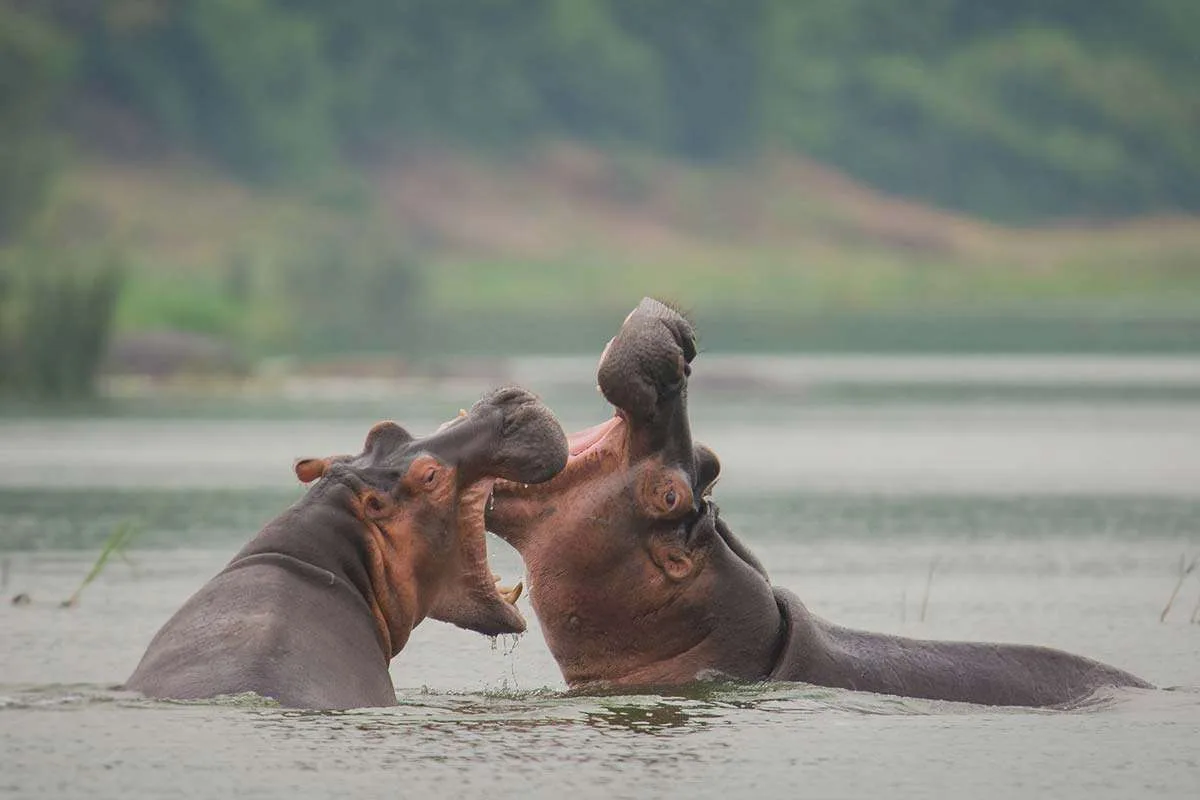
Lake Mburo National Park is Uganda’s most accessible savannah park from Kampala and one of its most consistently overlooked — a compact, beautiful park of open acacia grasslands, papyrus swamps, and the lake itself, positioned directly on the Kampala to Queen Elizabeth highway and offering game drive experiences that combine zebra, impala, topi, warthog, eland, and hippo with some of the finest birding in western Uganda. Lake Mburo is the only park in Uganda where you can walk and cycle among the wildlife without a ranger escort, creating a freedom of movement that the more heavily regulated large parks cannot offer. Its size means a morning and afternoon game drive covers the circuit comprehensively, making it ideal as a half-day or overnight stop on the Kampala to Queen Elizabeth road trip rather than a destination requiring a dedicated visit. The lakeside campsite is one of Uganda’s most atmospheric overnight options, and the dawn chorus over the water — hippos calling from the shallows, fish eagles overhead, hundreds of waterbirds moving through the papyrus — is reason enough to spend a night rather than simply passing through.
Mgahinga Gorilla National Park — Bwindi’s Quieter Neighbour
Mgahinga Gorilla National Park in Uganda’s extreme southwestern corner, tucked between Rwanda and DRC on the slopes of the Virunga volcanoes, offers gorilla trekking and golden monkey tracking in a setting that is geographically and visually distinct from Bwindi — an open, volcanic landscape of giant lobelia and Hagenia forest that feels more like highland Rwanda than Uganda’s equatorial rainforest interior. Mgahinga is significantly less visited than Bwindi for the straightforward reason that it has only one habituated gorilla group and permits can be harder to plan around — but for visitors who secure a permit, the trek through the Virunga foothills to the gorilla group is one of Uganda’s most scenically dramatic wildlife experiences. The golden monkey tracking at Mgahinga is arguably the best in the world, with habituated troops moving through the bamboo forest at close range in conditions that produce exceptional photography. The park is also the starting point for the Virunga volcanoes hiking circuit — Mount Sabyinyo, Mount Gahinga, and Mount Muhavura can all be climbed on day hikes from the park headquarters.
Rwenzori Mountains National Park — The Mountains of the Moon
The Rwenzori Mountains on Uganda’s border with the Democratic Republic of Congo are Africa’s third highest mountain range and one of the continent’s most extraordinary and least visited highland wildernesses — a UNESCO World Heritage Site of glaciated peaks, giant groundsels, tree heathers draped in old man’s beard, and Afro-alpine moorland that Ptolemy called the Mountains of the Moon and that has lost none of its mythological character in the centuries since. The Rwenzoris are a serious multi-day trekking destination — the classic circuit to Margherita Peak takes seven to nine days — but the lower trails accessible on day hikes from Kasese are genuinely rewarding and can be incorporated into a Queen Elizabeth circuit without requiring a full mountaineering commitment. The approach drive from Kasese through the Rwenzori foothills with the mountains rising dramatically above the treeline is one of Uganda’s most visually striking road experiences, and the Rwenzori landscape is so different from anything else on the Uganda self drive circuit that it reframes the country’s geography in a single view.
Ziwa Rhino Sanctuary — Uganda’s Only Wild Rhino Encounter
The Ziwa Rhino Sanctuary on the Kampala to Murchison Falls highway is the only place in Uganda where white rhinos can be seen in the wild — a conservation success story that has re-established a breeding population of southern white rhinos on Ugandan soil after the species was hunted to local extinction in the 1980s. Guided walking encounters with the rhino groups at close range on foot, accompanied by armed rangers, produce the kind of intimate large mammal experience that game drive vehicles in national parks cannot replicate — rhinos at five metres on foot are a different category of encounter entirely from rhinos viewed from a Land Cruiser window at fifty. Ziwa is positioned directly on the most-driven road in Uganda’s safari circuit, making it a zero-detour addition to the Kampala to Murchison Falls drive that takes three to four hours and transforms a transit day into one of the most memorable stops on the entire road trip. Our Kampala to Murchison Falls self drive route builds Ziwa in as a recommended stop on every northern circuit itinerary.
Planning Your Hidden Gems Uganda Road Trip
The beauty of Uganda’s hidden gems is that most of them are located on or very close to the standard self drive circuit routes — Ziwa on the Murchison highway, Lake Mburo on the Queen Elizabeth road, Mabamba at the airport end of any circuit, Semuliki an easy extension from Fort Portal. Adding them to an existing itinerary requires modest additional planning and occasionally one extra driving day, but the experiences they deliver are often the ones that self drive visitors talk about most on their return. Browse our Uganda safari packages and self drive car hire options, or contact our team today to build Uganda’s hidden gems into your self drive itinerary alongside its headline national parks.
Related posts

Leave a Comment